
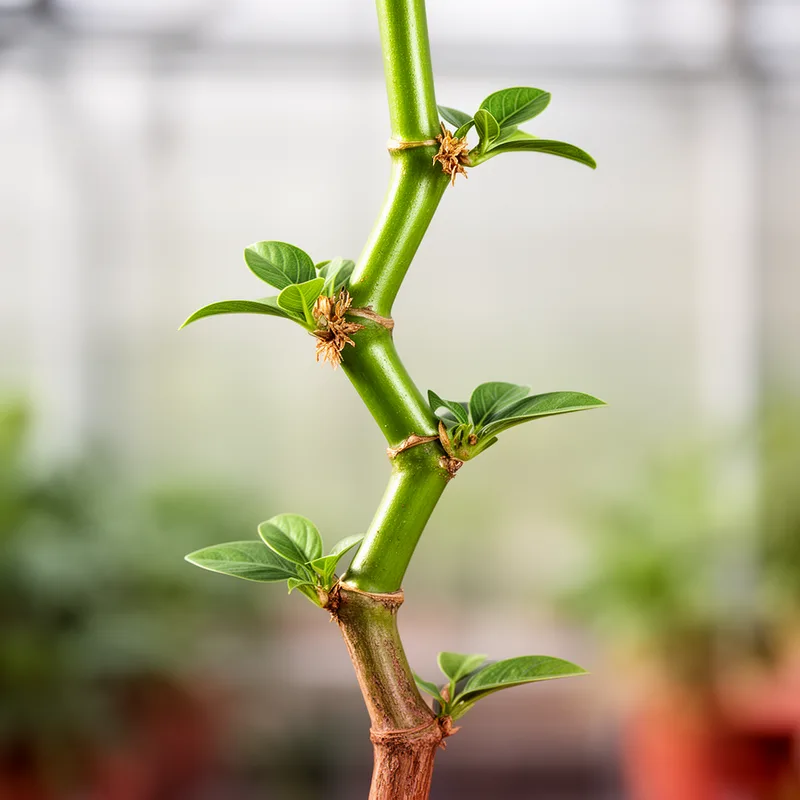
sympodia
- noun
- /sɪmˈpoʊdiə/
- Specialized
- The farmer observed that the number of sympodia on the plants directly influenced their overall yield.
- sympodia per plant
Examples
-
Ashokkumar and Ravikesavan (2010) reported a positive correlation of sympodia per plant with boll weight and bolls per plant, which is in agreement with the present studies.
Academic text (2014) -
Ashokkumar and Ravikesavan (2010) reported the positive role of bolls per plant via sympodia per plant, boll weight, and ginning out turn.
Academic text (2014) -
While considering sympodia per plant, its significant positive genotypic and phenotypic association was found with bolls per plant, plant height, staple length, fiber fineness, and GOT.
Academic text (2014) -
In the botanical study, researchers analyzed the impact of sympodia on the growth patterns of various plant species.
-
The scientist explained how sympodia contribute to the structural diversity of plant growth forms.
Synonyms


 1
9.1
A part of a plant stem between two places where leaves or branches grow
Surface Forms
Morphology
sympodia = sympodium (semi-transparent) = sym + pod + ia
Built from sym- + pod- to refer to parts formed by sympodial growth; clear to specialists familiar with botanical morphology but not to average learners.
Etymology
Sympodia comes from Greek parts sym- 'together' and pod- 'foot', so it literally means 'feet together'. In botany the word describes stem segments that grow one after another like connected 'feet' or steps, which is why botanists call those joined parts sympodia.