
sympathetic
 4
7.3
4
7.3

- adjective
- /ˌsɪmpəˈθɛtɪk/
- Specialized
- From there, the appropriate response is then carried out by either the sympathetic or parasympathetic side of the autonomic system.
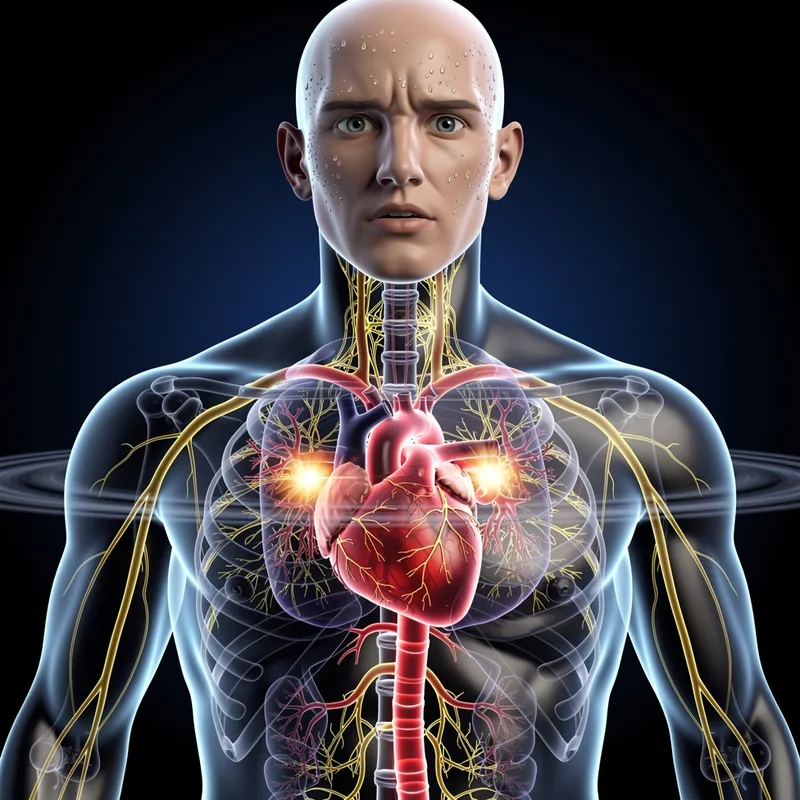
- sympathetic nervous system
- sympathetic and parasympathetic
- sympathetic system
Loading YouTube…
Watch on YouTubeSo strength is on a very sympathetic fight flight.
- So strength is on a very sympathetic fight flight.
- Then they have momentary activity which we could call sympathetic OverDrive, which we called stress.
- So we think that your type of body temperament is high sympathetic.
- Remember that a narcissistic relationship is just a long term period of living under chronic sympathetic nervous system activation.
- That's a sign that our bodies are breathe, are at, are, are in a sympathetic tone, low vagal tone, high stress.
- It is a reflexive response to trauma and fear and is protective, as all sympathetic nerve responses are meant to be.
- And what is happening there is the physiological consequence of sympathetic OverDrive and this CRH release.
- But it's that closed loop feedback because remember the the brain is controlling the periphery and controlling the sympathetic nervous system.
- And that is a sympathetic hypercortisol state and we you can see it in their Physiology.
- And if I were to measure sympathetic nerves, the Meyer frequency is mostly sympathetically driven.
- Whereas high chest, mouth breathing like this that stimulates your sympathetic nervous system and that's your stress fight and flight nervous system.
- We are constantly off balance and that sympathetic nervous system is always running, which over time takes a toll on our health.
- And we never allow this sympathetic fight or flight stressed aspect of our autonomic nervous system to calm down.
Examples
-
The high levels of angiotensin II also activate the sympathetic nervous system.
Academic text (2011) -
Tachycardia, due to the increase in sympathetic activity, may be present.
Academic text (2011) -
The sympathetic nervous system can lead to chronic pain.
-
It is a reflexive response to trauma and fear and is protective, as all sympathetic nerve responses are meant to be.
-
The sympathetic nervous system responds quickly when we are faced with danger.
-
During a stressful situation, the sympathetic nervous system prepares the body for a rapid response.
-
The sympathetic nervous system increases heart rate when we feel threatened.
Compounds


- Specialized
1
4.9
Part of the body that prepares you for action by raising heart rate and sending blood to muscles

- Specialized
1
7.4
Movement in one object caused by another object moving at the same rate

Surface Forms
Morphology
Etymology
The word sympathetic uses the Greek parts sym- 'together' and pathos 'feeling' and was applied to body systems that work 'together' in response to danger. So the sympathetic nervous system is the part that helps the body act quickly in stress or emergency.