

symmachy
- noun
- /ˈsɪməki/
- Archaic
- The ancient city-states formed a symmachy to defend against common threats.
Examples
-
The two nations formed a symmachy to combat external threats.
-
Historians often debate the effectiveness of the Peloponnesian symmachy in balancing power within Greece.
-
A symmachy can sometimes dissolve when the interests of the allies no longer align.
-
Many historians study the symmachies that shaped ancient warfare.
-
The ancient city-states formed a symmachy to defend against common threats.
-
A symmachy can sometimes dissolve when the interests of the allies no longer align.
-
Historians often debate the effectiveness of the Peloponnesian symmachy in balancing power within Greece.
Synonyms

 567
4.0

A formal agreement between countries or groups to work together
 10
3.0
Countries or groups that join together to fight a common enemy
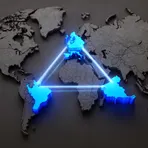 9
4.6
A group of countries that agree to work together for political or military reasons


 1
9.5
A group of countries that join by agreement to act together
How United
- Archaic
 567
4.0
32
6.0
- Formal
130
3.4
- Formal
∞
1.4
Surface Forms
Morphology
symmachy = machy (opaque) = sym + machy
Built from Greek combining elements (sym- + -machy) that are not productive or familiar to average learners, so the sense 'alliance' is not derivable from the visible parts.
Etymology
Symmachy comes from Greek parts sym- meaning 'together' and -machy meaning 'battle'. So a symmachy is literally 'battling together', which helps you remember it means an alliance for joint military action.