
sword lily
- noun
- /sɔrd ˈlɪli/
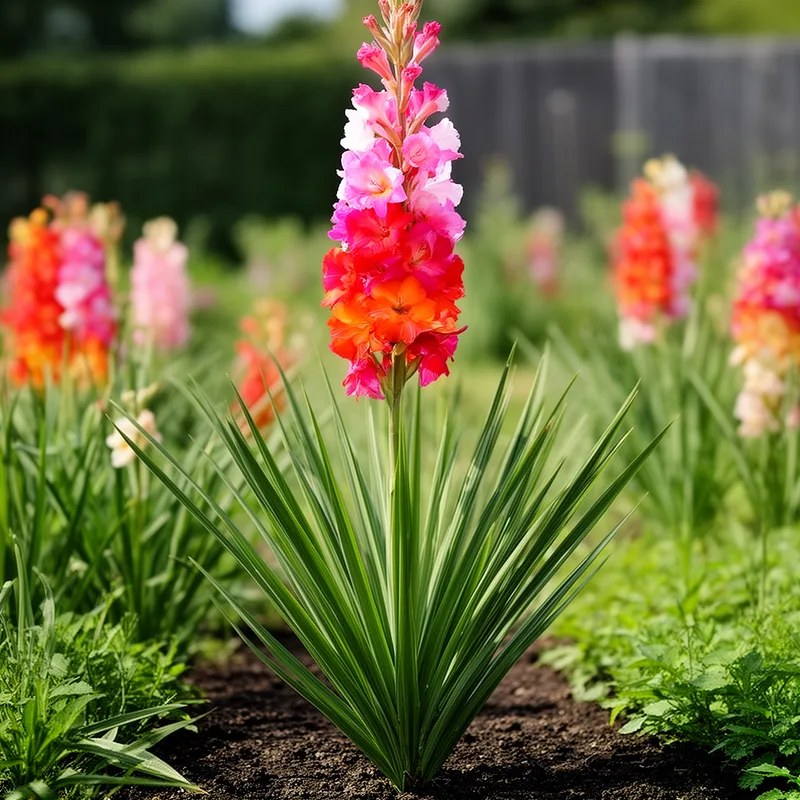
- The sword lily adds vibrant color to summer gardens with its tall, graceful spikes of flowers.
Examples
-
Gardeners often plant sword lilies for their dramatic foliage and long-lasting flowers.
-
She arranged a bouquet of sword lilies for the dining table, their blooms opening in the afternoon sunlight.
-
The sword lily blooms beautifully in the summer.
-
I planted several sword lilies in my garden.
-
Gardeners often plant sword lilies for their dramatic foliage and long-lasting flowers.
-
The sword lily adds vibrant color to summer gardens with its tall, graceful spikes of flowers.
-
She arranged a bouquet of sword lilies for the dining table, their blooms opening in the afternoon sunlight.
Synonyms

 2
6.3
2
6.3

A garden flower with long sword-shaped leaves and bright flowers on a tall stem


 1
9.1
1
9.1
A tall garden flower with long stems and bright flowers used in arrangements

A tall garden flower that has long sword-shaped leaves and bright flowers in tall spikes
Surface Forms
Morphology
sword + lily
The compound is clearly descriptive: 'sword' modifies 'lily' to indicate a lily with sword-shaped leaves. This is a compositional noun–noun pattern that directly signals a physical characteristic, so a B1 learner who knows 'sword' and 'lily' can infer the meaning.
Etymology
Sword lily is named for the plant's long, flat leaves that look like a sword and its bright flower called a lily. Its Latin name means 'little sword', so the name points to the plant's sword-shaped leaves and tall flower spikes.