
sweet bay


 1
7.5
1
7.5
- noun
- /swit beɪ/
- US
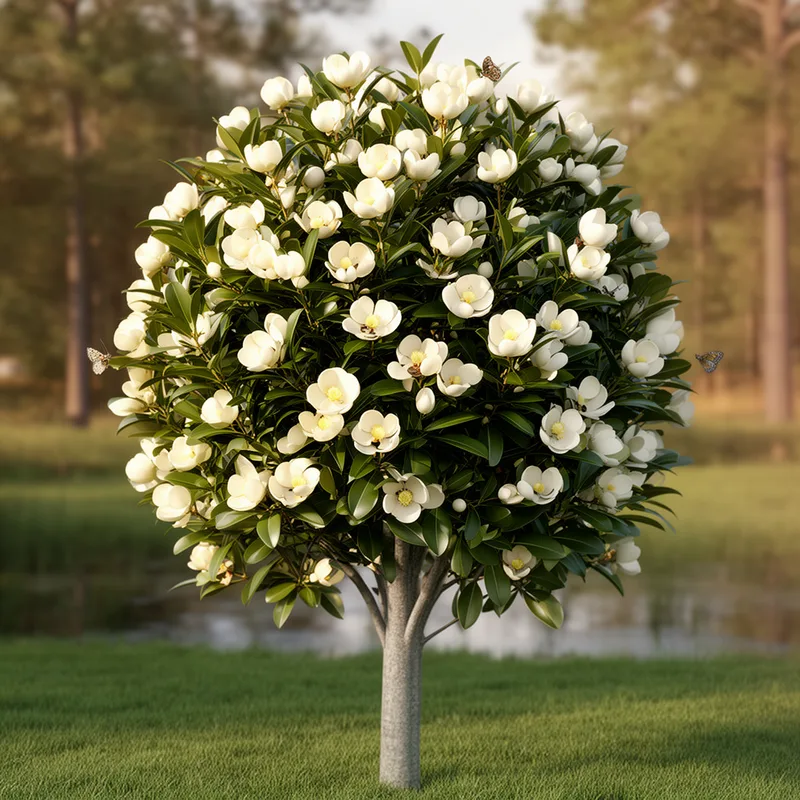
- The sweet bay magnolia produces beautiful white flowers that fill the air with a delightful fragrance.
- sweet bay magnolia
- sweet bay tree
Examples
-
The river swamp is dominated by bald cypress, with sweet bay magnolia and green ash as the prominent broad-leaved trees.
Academic text (1998) -
He ran past Felix and Pedro, past the ox barn, and past the auction block to a hedge of sweet bay trees that bordered the soccer field.
Fiction book (2002) -
Its culinary uses are the same as regular sweet bay.
Blog text (6) -
Also flowering in May is the sweet bay magnolia, a tree with narrow, white-backed leaves and a rich, creamy flower.
Academic text (1993) -
A slower-growing cultivar of sweet bay, this plant has attractive randomly gold-variegated leaves; its color is especially pronounced in spring and fall.
Blog text (6) -
In the southeastern United States, the sweet bay magnolia can often be found along the riverbanks, attracting pollinators with its blossoms.
-
With its glossy leaves and large, fragrant white flowers, the sweet bay magnolia is a popular choice for landscaping in warm climates.
Synonyms

A small tree or shrub from the southeast United States with sweet smelling white flowers
Surface Forms
Morphology
The meaning is directly compositional: 'sweet' (fragrant) modifies 'bay' (a type of tree), yielding a bay tree noted for a sweet/fragrant quality. This is a standard adjective + noun naming pattern (a variety of bay), so a B1 learner who knows both words can readily infer the intended botanical sense.
Etymology
Sweet bay: The plant name sweet bay comes from this small tree's very sweet-smelling white flowers and shiny leaves. People long ago thought its leaves were like the cooking herb 'bay', so the name joins sweet and bay to show it is a sweet-smelling, bay-like plant.