

sweet alison
- noun
- /swit ˈælɪsən/
- UK
- Every spring, she planted sweet alison to attract bees and butterflies to her flowerbeds.
Examples
-
The garden beds were filled with sweet alison to create a fragrant border along the path.
-
Clusters of sweet alison added a delicate touch of white to the rock garden.
-
The sweet alison blooms beautifully in spring.
-
I planted sweet alison in my garden this year.
-
Clusters of sweet alison added a delicate touch of white to the rock garden.
-
Every spring, she planted sweet alison to attract bees and butterflies to her flowerbeds.
-
The garden beds were filled with sweet alison to create a fragrant border along the path.
Synonyms

A small garden plant with many tiny white, sweet-smelling flowers

A low garden plant with many small, sweet-smelling white flowers
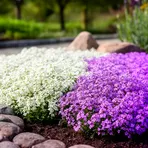
A small garden plant with sweet-smelling white or purple flowers often used as ground cover
Surface Forms
Morphology
sweet + alison
This is a lexicalized plant name where the adjective 'sweet' transparently signals a pleasant scent or flavour, but 'alison' is a specific (opaque) lexical item / proper name that does not yield the identity of the plant. A learner who knows 'sweet' can infer a fragrant or pleasant plant, but cannot derive the full, specific botanical meaning from the constituents alone.
Etymology
Sweet alison may get its name from the plant's very sweet-smelling flowers and an older name for the same little flower. Gardeners used sweet to mark the scent and alison from the old word 'alyssum', so today the name means 'a small, fragrant garden flower'.

