
swamp hickory
- noun
- /swɑmp ˈhɪkəri/
- US
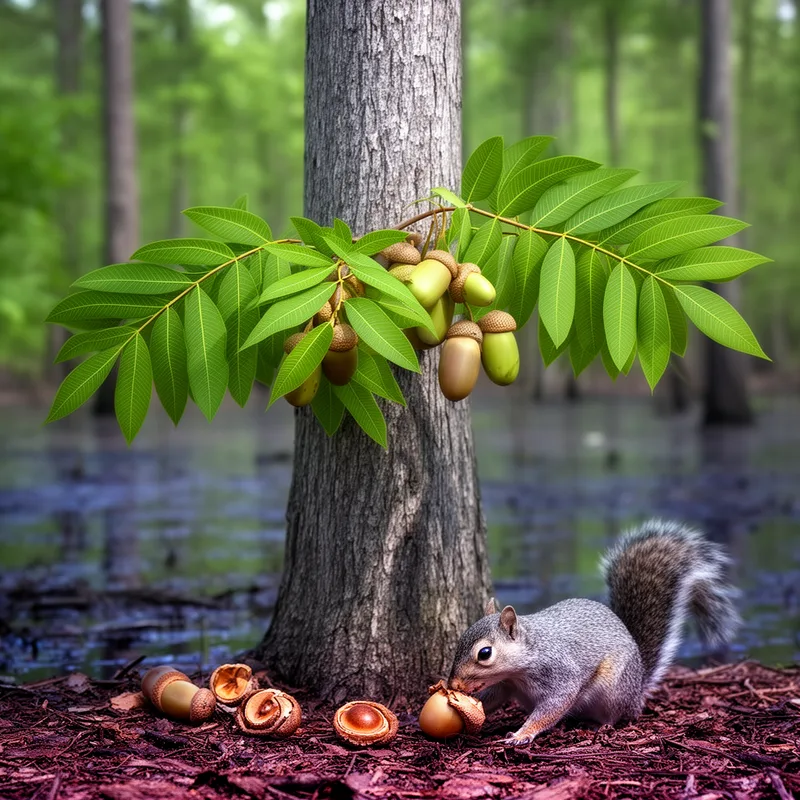
- We identified the tree as a swamp hickory by counting the leaflets and examining the thin shell of its nuts.
Examples
-
Squirrels tend to avoid the swamp hickory because its nuts are extremely bitter.
-
The swamp hickory thrives in wet bottomland forests across the southeastern United States.
-
The swamp hickory grows near the riverbanks.
-
Many swamp hickories thrive in wet soil.
-
Squirrels tend to avoid the swamp hickory because its nuts are extremely bitter.
-
The swamp hickory thrives in wet bottomland forests across the southeastern United States.
-
We identified the tree as a swamp hickory by counting the leaflets and examining the thin shell of its nuts.
Synonyms

A North American tree with leaves of seven or nine leaflets and thin-shelled, very bitter nuts

A hickory tree with leaves that have seven or nine small parts and thin shelled nuts that taste very bitter

A tree in the eastern United States with leaves of seven or nine small parts and thin, very bitter nuts

A hickory tree from eastern North America with leaves made of 7 or 9 small parts and thin, bitter nuts

A hickory tree that makes bitter thin-shelled nuts and the nut itself
Surface Forms
Morphology
The meaning is directly and compositionally derived from 'swamp' (a wetland) + 'hickory' (a tree): it denotes a hickory that grows in swampy areas. This noun–noun/attributive construction is regular and cross-linguistically common, so a B1 learner who knows both constituents would readily infer the intended meaning.
Etymology
Swamp hickory is the name for a hickory tree that grows in low, wet places called 'swamps'. Picture a hickory standing in muddy ground with many leaflets and very bitter nuts, and that clear image is why the name refers to this particular type of tree.

