

swallower


 1
8.2
1
8.2
- noun
- /ˈswɑːlə/
- During the storm, the river turned into a swallower, rapidly consuming anything that came too close to its banks.
Examples
-
The black hole is a swallower of light, making it impossible to see what lies beyond its event horizon.
-
The all-time champion swallower of any object swallowed 2,533 objects in 1927.
Fiction book (1991) -
The massive hole in the ground proved to be a swallower of all the debris from the collapsed building.
Synonyms
 12
7.5
12
7.5
A person or animal that chews food loudly
 2
8.0
2
8.0
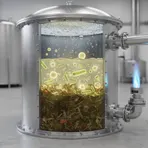
A strong tank that uses bacteria to break down plant or animal waste and make gas

A person who collects new people's information or a device that brings air into a system

A person, animal, or machine that chews and grinds food
Compounds

Surface Forms
Morphology
Etymology
Swallower comes from the verb swallow, meaning 'to take in or cover completely', with the ending -er that makes it 'a thing that does the action'. So we call a machine, place, or natural feature a swallower when it seems to take things in or consume them, often suddenly or completely.