
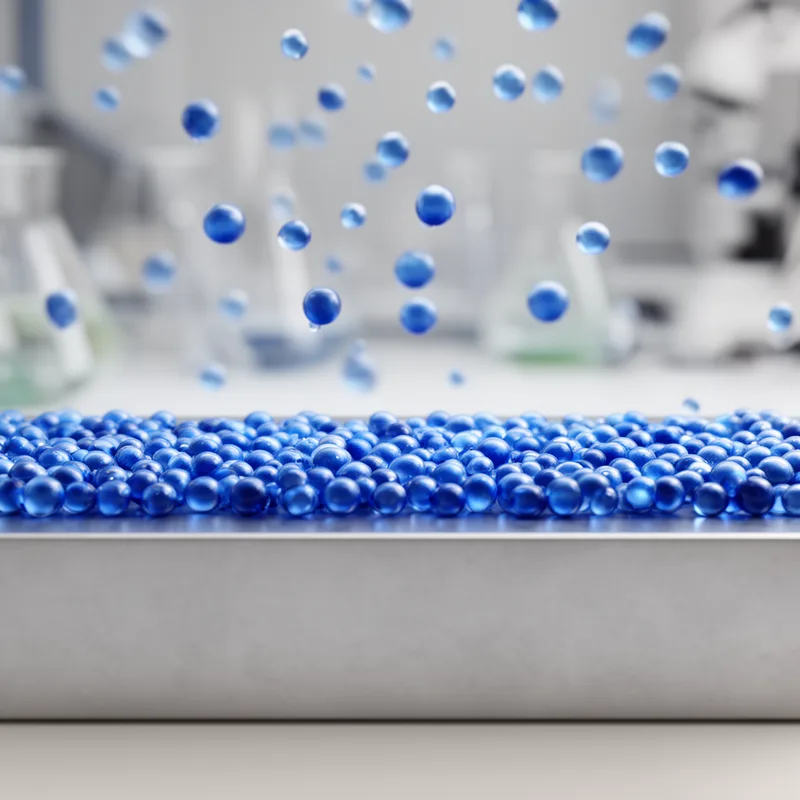
surface assimilation
- noun
- /ˈsɜrfɪs əˌsɪməˈleɪʃən/
- Specialized
- Researchers studied the surface assimilation of water vapor on various minerals.
Examples
-
Catalysts are often activated by surface assimilation of reactant gases.
-
The efficiency of the filter depends on rapid surface assimilation of impurities.
-
The process of surface assimilation is crucial in material science.
-
Can you explain surface assimilation in simpler terms?
-
Researchers studied the surface assimilation of gas molecules on different solid materials to understand thin film formation.
-
The efficiency of the filter is enhanced by effective surface assimilation, allowing for better trapping of airborne pollutants.
-
In environmental science, surface assimilation plays a key role in understanding how pollutants accumulate on soil particles.
Synonyms

 1
8.9
1
8.9

Tiny particles from a gas or liquid stick to a surface and form a thin layer
Surface Forms
Morphology
surface + assimilation
The noun is compositionally built from 'surface' (clear to a B1 learner) and 'assimilation' (an abstract verb/noun meaning absorption or incorporation), so a learner who knows both words can infer this refers to a process occurring at a surface. However, 'assimilation' is semantically broad and the specific technical sense of molecules accumulating to form a thin film is specialized and not fully predictable from everyday senses, so the relation is only partially transparent.
Etymology
Surface assimilation is the image of tiny particles from a gas or liquid landing on the top of a solid and sticking there, where surface is the top and assimilation is the gathering. That's why it means 'the build-up of molecules on a surface to form a thin layer'.