

supply-side economics
 3
7.2
3
7.2

- noun
- /səˈplaɪ saɪd ˌɛkəˈnɑmɪks/
- Specialized
- The government implemented policies based on supply-side economics to stimulate the economy and encourage business development.
- Reagan's supply-side economics
- believer in supply-side economics
- supply-side economics and trickle-down
Examples
-
That does not mean that we agree with the supply-side economics embraced by the Republicans.
Blog text (5) -
Critics argue that supply-side economics disproportionately benefits the wealthy while neglecting the needs of lower-income families.
-
And it took supply-side economics to allow the real wealth of capitalism to be realized.
Blog text (32) -
Supply-side economics is the pivotal issue of this election and our time!
Blog text (18) -
Reaganomics was a political term for supply-side economics, a new development in economic theory.
Blog text (14) -
Think of our future as an economic choice between supply-side economics and demand-side economics.
Blog text (18) -
Be that as it may, she's still a reliable spokesperson for the failed policies variously described as trickle-down or supply-side economics.
Blog text (18) -
But George Bush 43 devastated consumer demand and the great middle class with 8 years of supply-side economics and tax giveaways to the top 1% that now have 50% of America's wealth.
Blog text (18) -
First popularized by Ronald Reagan, supply-side economics was also called voodoo economics by George Bush 41, and is now often known as trickle-down economics.
Blog text (18) -
Many economists believe that supply-side economics can lead to increased investment and job growth.
Synonyms
 7
8.1
7
8.1
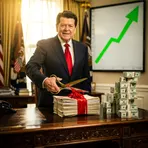
Economic policies by U.S. president Ronald Reagan in the 1980s that cut taxes, reduce rules, and lower government spending
Surface Forms
Morphology
supply-side + economics
The compound clearly signals a subtype of economics focused on the 'supply' side (i.e., production/input factors), so a learner who knows 'supply', 'side' and 'economics' can infer that it refers to an approach emphasizing supply. However, the specific policy implications (tax cuts, deregulation) and technical connotations are specialized and not fully predictable from the parts, so it is only partly transparent to a B1 learner.
Etymology
Supply-side economics paints a simple picture: the word supply means the people and companies who make goods and services. One common idea is that cutting taxes and having fewer rules helps them produce more, and that extra production makes the whole economy 'grow', so the term refers to policies that try to boost production to create 'growth'.