
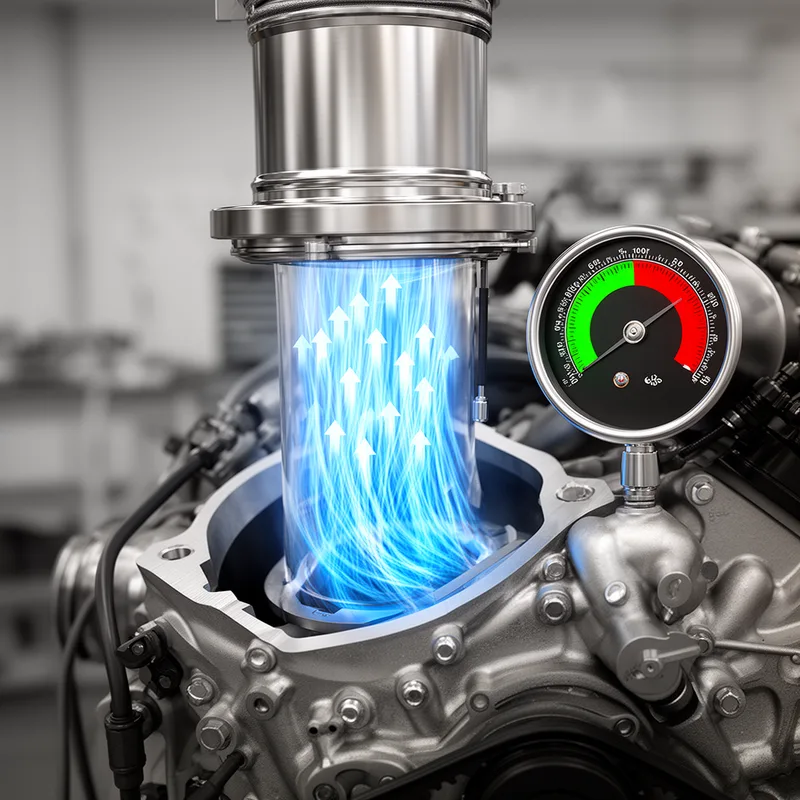
to supercharge
7.0
To raise the pressure of air or liquid entering an engine
- verb
- /ˈsuːpərˌtʃɑːrdʒ/
- Specialized
:
aumentar la presión
- The engineer designed a new system to supercharge the fuel efficiency of the engine.
Examples
-
And then suddenly dropping in the the engine of a sports car into it supercharged, you know, goes a lot faster, you got a lot more power.
-
To improve performance, the mechanics decided to supercharge the vehicle's intake system.
-
By modifying the exhaust system, they were able to supercharge the car's engine and boost its power.
Synonyms
 30
5.2
30
5.2

To increase or keep air pressure inside a closed space using a machine
focuses on raising fluid pressure within engines or mechanical systems

to turbocharge
vsto supercharge
1
6.2
To make something much faster or more effective
raises fluid pressure specifically rather than general performance improvement
Antonyms


How Powerful
to turbocharge
1
6.2
1
6.2

to supercharge
- Specialized
to pressurize
30
5.2
- Specialized
30
5.2
to boost
265
2.5
265
2.5
Surface Forms
supercharge infinitive
supercharged past
supercharged past participle
supercharging present participle
supercharges third person singular
Morphology
Etymology
Supercharge comes from the parts super- meaning 'above' or 'extra' and charge meaning 'to put in' or 'load', and it was first used for engines where extra air or gas is pushed in under pressure. So to supercharge an engine is to push in extra air or pressure to make it more powerful.