
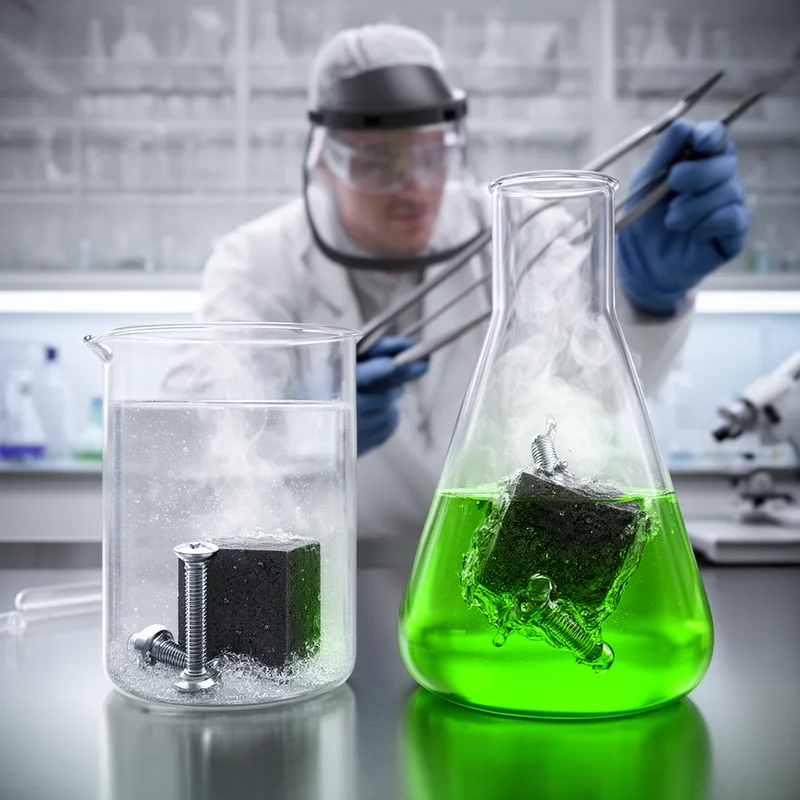
superacid
 1
9.6

- noun
- /ˈsuːpərˌæsɪd/
- Specialized
- The chemist experimented with a superacid that could dissolve glass.
Examples
-
When the superacid was added to the solution, it caused an immediate and violent reaction.
-
To create a superacid, you need a combination of specific chemicals that are far more reactive than sulfuric acid.
-
A superacid can dissolve substances that regular acids cannot.
-
Chemists use superacids to study reactions that are impossible with ordinary acids.
-
The laboratory handled the superacid with extreme caution due to its high reactivity.
-
A superacid can protonate even the weakest bases.
-
The chemist used a superacid in the reaction.
Antonyms

How Acidic

Surface Forms
Morphology
Etymology
Superacid combines super- ('above' or 'very') and acid ('sour' or 'acid'), so it literally means a very strong acid. Think of it as the 'superhero' of acids: much stronger than normal acids and able to react with things ordinary acids cannot.