

sulky demeanor
- noun
- /ˈsʌlki dɪˈmiːnər/
- She sat in the corner with a sulky demeanor, refusing to join the conversation.
Examples
-
The manager noticed the intern's sulky demeanor after being assigned extra work.
-
Despite winning second place, his sulky demeanor made it clear he wasn't satisfied.
-
Don't have such a sulky demeanor!
-
She has a sulky demeanor today.
-
Despite winning second place, his sulky demeanor made it clear he wasn't satisfied.
-
She sat in the corner with a sulky demeanor, refusing to join the conversation.
-
The manager noticed the intern's sulky demeanor after being assigned extra work.
Synonyms

 15
3.9
15
3.9

An angry look that shows you do not like something
 5
4.3
5
4.3
Frequent changes in feelings that make someone sad, angry, or sulky
 3
8.2
3
8.2
An angry, silent look that shows someone is upset
 3
4.3
3
4.3
A time of refusing to talk because you feel annoyed or disappointed
 1
7.9
1
7.9
A quiet, gloomy mood that shows anger or hurt
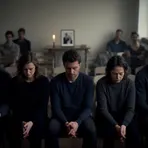 1
6.5
1
6.5
A serious, sad mood that feels quiet and heavy


 1
8.4
1
8.4
A gloomy, unfriendly mood that makes a person quiet and hard to approach
 1
4.0
1
4.0
A feeling of anger and bitterness after a disagreement

A mood of being quiet and annoyed

A quiet unhappy mood when someone shows anger or hurt feelings

A sad, sulky mood when someone avoids other people

Being quietly angry and refusing to talk or be friendly

A silent angry look that shows you feel upset or annoyed
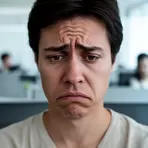
A sad, frowning look on a person's face
Antonyms

How Sulky

Surface Forms
Morphology
The meaning 'a gloomy or moody attitude' is directly and compositionally derived from 'sulky' (quietly resentful or moody) modifying 'demeanor' (one's behavior/attitude). This simple adjective+noun construction follows standard English composition patterns (and similar patterns in many languages), so a B1 learner who knows both constituents will readily infer the MWE meaning.
Etymology
Sulky demeanor comes from sulk, which means to sit apart and show unhappiness, and demeanor, which means how someone looks or acts. Think of a person with crossed arms and a downturned mouth. This image shows a 'gloomy or moody attitude', so the phrase describes someone who looks unhappy and refuses to join in.