

to sulfate
- verb
- /ˈsʌlfeɪt/
- Specialized
- In precocial animals, their more mature skins at birth contain a greater proportion of sulfated proteoglycans (keratin sulfate), glycosaminoglycans designed to withstand greater mechanical forces.
Examples
-
If the battery is not maintained properly, it may sulfate, leading to reduced performance.
-
During discharge the lead electrode turns lead into lead sulfate and during recharge it converts that back.
-
Both isoforms contain the heparin-binding sequence (HBS) of basic residues, which is essential for binding to cell-surface heparin-sulfated proteoglycans.
Blog text (1) -
To improve efficiency, technicians sulfate the components in the production process.
-
After extended use, the electrodes can sulfate, which negatively impacts the battery's lifespan.
Compounds

- Specialized


 1
3.7
1
3.7
A white mineral used to make plaster, improve soil, and to make some foods and medicines

- Specialized
1
4.6
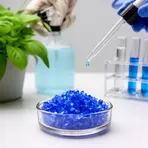
A bright blue salt used to kill fungus on plants and for simple lab work


- Specialized
A bright blue chemical in crystals used in gardens and labs to kill fungus and test liquids

- Specialized
A strong medicine that helps people with ADHD pay attention and helps those with narcolepsy stay awake


- Specialized
A white powder used in paint, in industry, and to help X-rays show the inside of the body

- Specialized
A small negative particle that forms when sulfuric acid loses one hydrogen

- Specialized
A chemical used in many shampoos and soaps that makes foam and can irritate skin

- Specialized
A colorless powder that dissolves in water and is used to dye cloth, protect wood, and plate metal
Surface Forms
Etymology
The verb sulfate is formed from sulfur plus the ending -ate, where -ate can mean 'to make into' in chemistry. So to sulfate something is to treat it so it turns into a sulfate, which is why the verb means to make something contain sulfate.