

subway token
 2
4.0
2
4.0

- noun
- /ˈsʌbˌweɪ ˈtoʊkən/
- Archaic
- She found an old subway token while cleaning out her wallet from years ago.
- subway token booth
- two subway tokens
Loading YouTube…
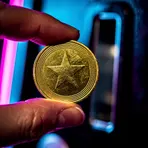
Watch on YouTubeThis is just a really simple little gold chain, and on it here is a New York subway token.
- This is just a really simple little gold chain, and on it here is a New York subway token.
Examples
-
But as my fingers rummage desperately at the bottom of my purse, finally closing around a subway token, I realize this is all the reason I need at the moment.
Fiction book (1994) -
He used a subway token to enter the station before electronic fare cards became common.
-
You got an extra subway token on you?
Fiction book (2000) -
But now I needed another subway token, and I had already spent my two nickels.
Fiction book (1999) -
My first job was collecting subway tokens in the subway.
-
I was too young to get into the clubs that lined Christopher Street, too broke to buy more than a slice of pizza and a subway token, and the piers were the one place where I didn't have to have money or be "normal" to hang.
Academic text (2012) -
I noticed that Henry had on penny loafers without socks, and he'd inserted a subway token in the slot where the penny belonged.
Fiction book (1999) -
The collector displayed various subway tokens from different cities around the world.
Synonyms
 36
3.6
36
3.6
A metal or plastic coin used instead of money in machines
How Modern
- Specialized
347
3.4

- Specialized
3
3.7
- Specialized
1
4.6
∞
1.0
- Archaic
2
4.0
Surface Forms
Morphology
The meaning 'a coin-shaped token used to pay for entry into a subway' is directly derivable from combining 'subway' (the transit system) with 'token' (a disk used as a payment substitute); the modifier specifies the domain of the token. This straightforward noun–noun compositional pattern is common cross-linguistically and should be immediately understandable to a B1 learner who knows both constituents.
Etymology
Subway token comes from the small metal coin people used to push into a turnstile to open the gate and get onto the train. That's why it means 'a coin used to pay for entry', even though many systems now use cards instead.