

suborder Serpentes
- noun
- /ˈsʌbˌɔrdər ˈsɜrˌpɛntiːz/
- Specialized
- The suborder Serpentes includes more than 3,000 different species of snakes.
Examples
-
The suborder Serpentes includes various species of snakes.
-
Scientists have discovered new fossil evidence within the suborder Serpentes.
-
All true snakes are classified under the suborder Serpentes in biological taxonomy.
-
Many reptiles belong to the suborder Serpentes.
-
All true snakes are classified under the suborder Serpentes in biological taxonomy.
-
The suborder Serpentes includes more than 3,000 different species of snakes.
-
Scientists have discovered new fossil evidence within the suborder Serpentes.
Synonyms
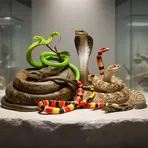
A group of reptiles made up of all snakes

A group of animals that includes all snakes
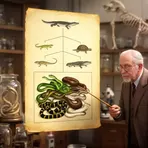
An old scientific group used to classify snakes
Surface Forms
Morphology
The phrase is compositionally transparent: 'suborder' denotes a taxonomic rank and 'Serpentes' names the group of snakes, so together they clearly mean the suborder called Serpentes (the snakes). This naming pattern is a regular, cross-linguistic way to label taxa, so a B1 learner who knows both constituents would be able to infer the meaning.
Etymology
Suborder Serpentes gets its name from Latin: Serpentes comes from the word 'serpens', meaning 'a snake' or 'to crawl', and suborder means a smaller 'group' inside a larger one. So the name literally points to the group of animals that are snakes, which is why it means 'the group of all snakes'.

