
suborder Sciuromorpha
- noun
- /ˈsʌbˌɔrdər ˌskiːʊəˈmɔrfə/
- Specialized
- The suborder Sciuromorpha encompasses a wide variety of rodents, including squirrels and their relatives.
Examples
-
Scientists debate the exact classification within the suborder Sciuromorpha based on recent genetic findings.
-
Members of the suborder Sciuromorpha are found on every continent except Australia and Antarctica.
-
The suborder Sciuromorpha includes various rodent species.
-
Many animals in the suborder Sciuromorpha are known for their bushy tails.
-
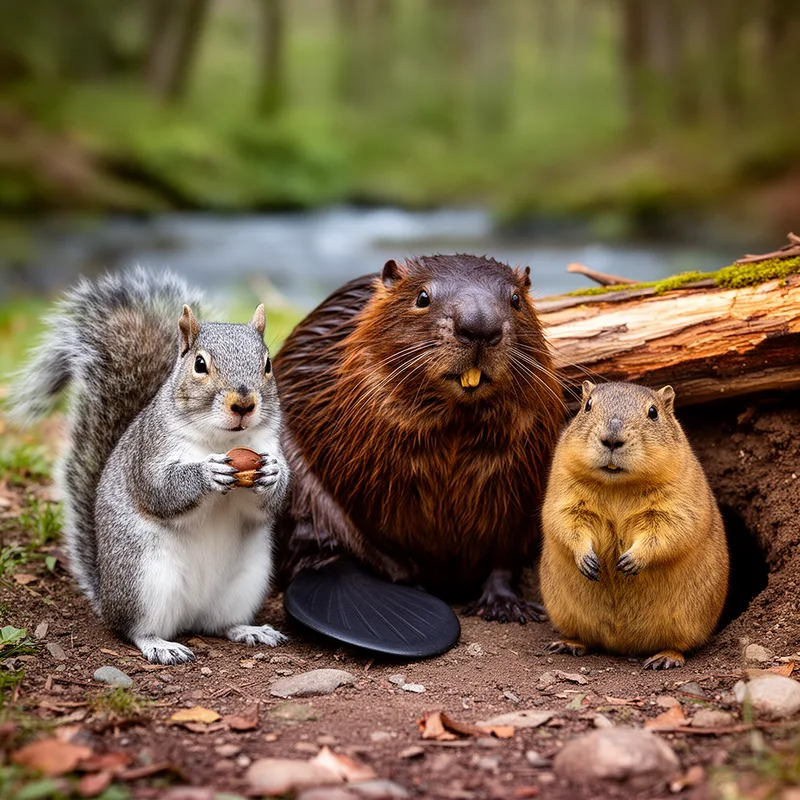
The suborder Sciuromorpha includes species such as squirrels, beavers, and gophers that are commonly found in forests.
-
Researchers have identified over 200 species within the suborder Sciuromorpha, highlighting its diversity.
-
In the suborder Sciuromorpha, animals are characterized by their distinctive features like bushy tails and strong hind legs.
Synonyms

A group of rodents that includes squirrels, marmots, gophers and beavers
Surface Forms
Morphology
This is a straightforward taxonomic noun phrase: 'suborder' names a classification level and 'Sciuromorpha' names the rodent group, so the overall meaning (a suborder consisting of Sciuromorpha rodents) is directly derivable from the parts. Scientific naming patterns like 'rank + taxon name' are cross-linguistically regular, so a B1 learner who knows both constituents would readily understand it.
Etymology
Suborder Sciuromorpha comes from parts sciu- meaning 'squirrel' and -morpha meaning 'shape', so imagine a group of 'squirrel-like' animals. That's why the name is used for a group of rodents that includes squirrels, marmots, gophers and beavers.

