
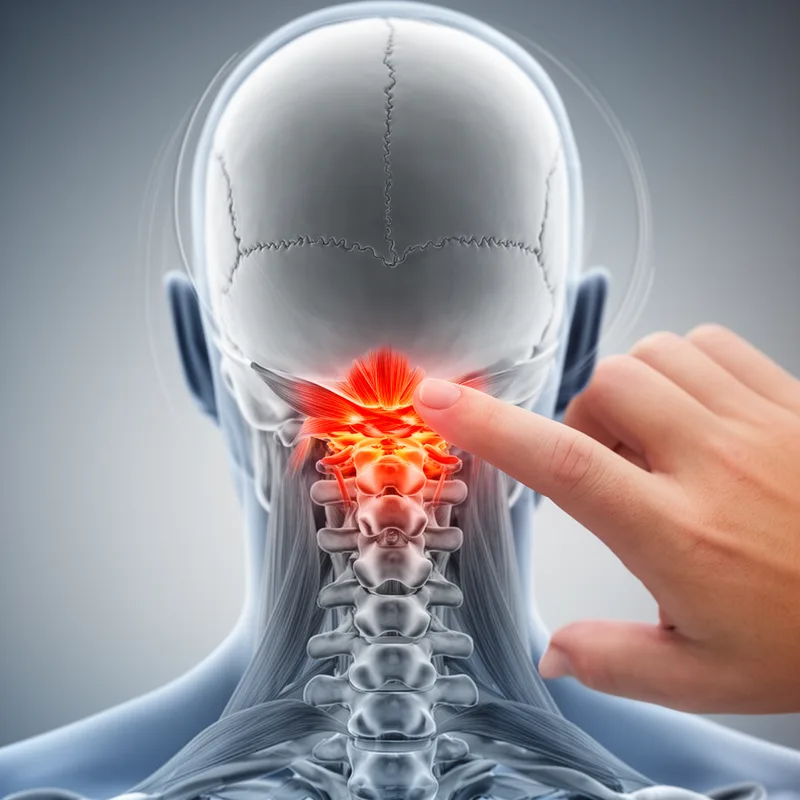
suboccipital muscle
- noun
- /ˌsʌb.ɒkˈsɪp.ɪ.təl ˈmʌs.əl/
- Specialized
- The suboccipital muscles help stabilize the head during movement.
Examples
-
Physical therapists often focus on the suboccipital muscles to improve posture.
-
Tightness in the suboccipital muscles can lead to tension headaches.
-
And just look up and down and you'll feel those muscles, those called suboccipital muscles engaging, right?
Synonyms
A small muscle under the bone at the back of the skull
Surface Forms
Morphology
This is a straightforward nominal composition: the adjective 'suboccipital' means 'located under the occipital bone' and 'muscle' names the tissue, so the phrase directly denotes a muscle located beneath the occipital bone. Although anatomical and somewhat technical, the meaning is compositional and follows standard adjective + noun naming patterns, so a learner who knows both constituents will understand it.
Etymology
The noun suboccipital muscle paints a simple picture: sub- means 'under' and occipital means the 'back of the skull', so these are the small muscles right under the base of the skull. They help turn and hold the head, so when these muscles are tight you may feel neck pain or have trouble moving your head.

