
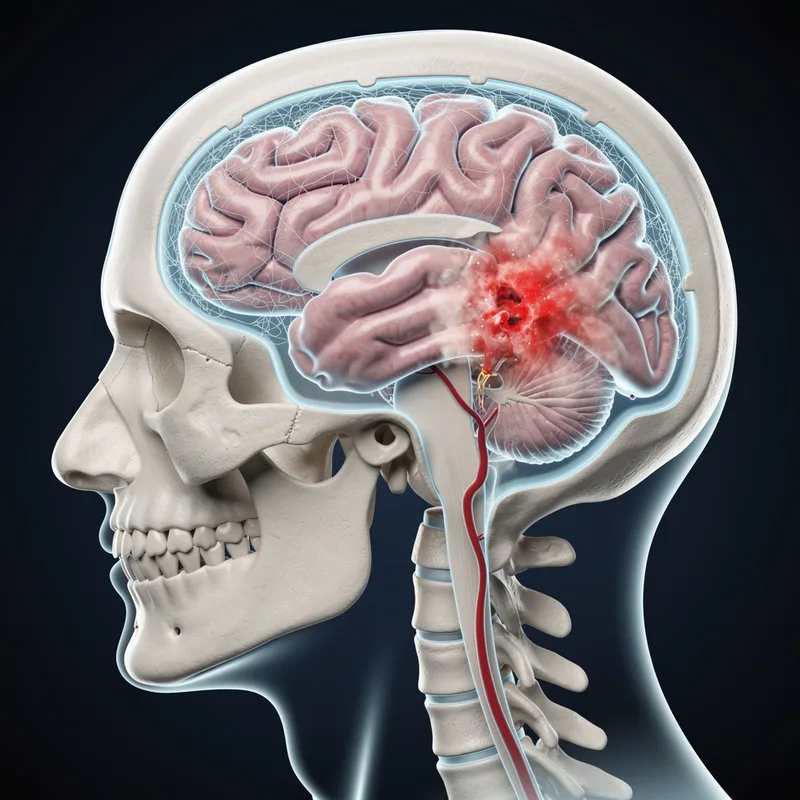
subarachnoid
 4
9.5
4
9.5

- adjective
- /ˌsʌbəˈræk.nɔɪd/
- Specialized
- We report ten patients with proven CVST who presented with acute severe headache mimicking subarachnoid haemorrhage.
- subarachnoid hemorrhage
- subarachnoid space
- subarachnoid shunt
Examples
-
Typical classification of neurocysticercosis is parenchymal, intraventricular, subarachnoid, and spinal neurocysticercosis based on parasite/lesion location 5,7.
Academic text (2016) -
In patients with thunderclap headache, subarachnoid haemorrhage is a possible diagnosis.
Academic text (1996) -
OK, You say it's in the subarachnoid space surrounding the brain.
-
Which means we can head for the subarachnoid cavity.
-
The dark area is the fluid within the cerebral ventricles, the CSF, as well as the dark area here in the subarachnoid space.
-
In patient 8, examination of CSF showed erythrocytes and bilirubin, signs of subarachnoid hemorrhage.
Academic text (1996) -
A subarachnoid hemorrhage can lead to severe headaches and other neurological symptoms.
-
Doctors often examine the subarachnoid space during procedures to check for bleeding.
-
The subarachnoid region is crucial for the circulation of cerebrospinal fluid around the brain.
Compounds
- Specialized

 1
7.3
1
7.3
The space around the brain and spinal cord that holds the clear fluid that cushions them
Surface Forms
Morphology
Etymology
Subarachnoid breaks into sub- meaning 'under' and arachnoid meaning 'spider-like', the same root as arachnid ('spider'), because the arachnoid membrane looks like a thin web. So subarachnoid describes the space 'under' that web-like layer around the brain and spinal cord.