
stumpage
- noun
- /ˈstʌmpɪdʒ/
- Specialized
- By subtracting the costs of timber extraction, transport, and milling from the timber's market values, a detailed "stumpage-value" model was constructed for the forestry accounts to estimate stumpage values separately for hard, soft, and medium-density woods for each year studied.
Examples
-
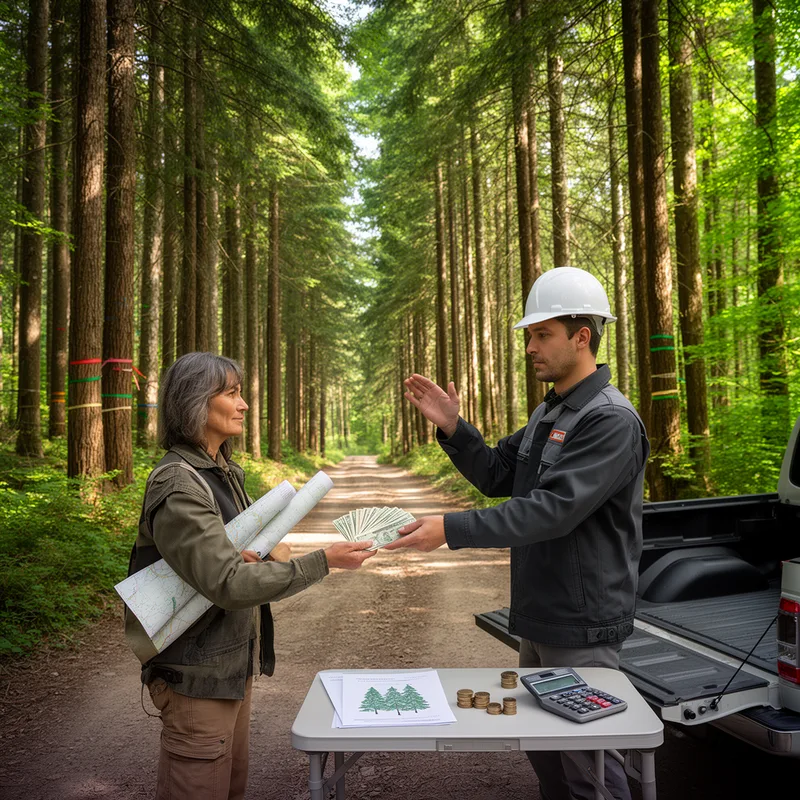
Foresters assess the stumpage of trees to determine their potential market value.
-
By sunset, I could predict the stumpage price of virtually any standing tree.
Academic text (2010) -
The only compensation communities received for logging on their lands was sporadic employment opportunities and a payment for logging rights called stumpage fees.
Academic text (2003) -
By subtracting the costs of timber extraction, transport, and milling from the timber's market values, a detailed "stumpage-value" model was constructed for the forestry accounts to estimate stumpage values separately for hard, soft, and medium-density woods for each year studied.
Academic text (1992) -
The landowner calculated the stumpage value before deciding whether to sell the timber.
-
Investors often look at the stumpage on a property to estimate its profitability in timber production.
Surface Forms
Morphology
Etymology
Stumpage is built from stump ('a tree left after cutting') and the ending -age, which can mean an amount or a charge, like postage. That's why stumpage can mean the value or amount of the trees standing on a piece of land, because that is what someone might pay for.

