
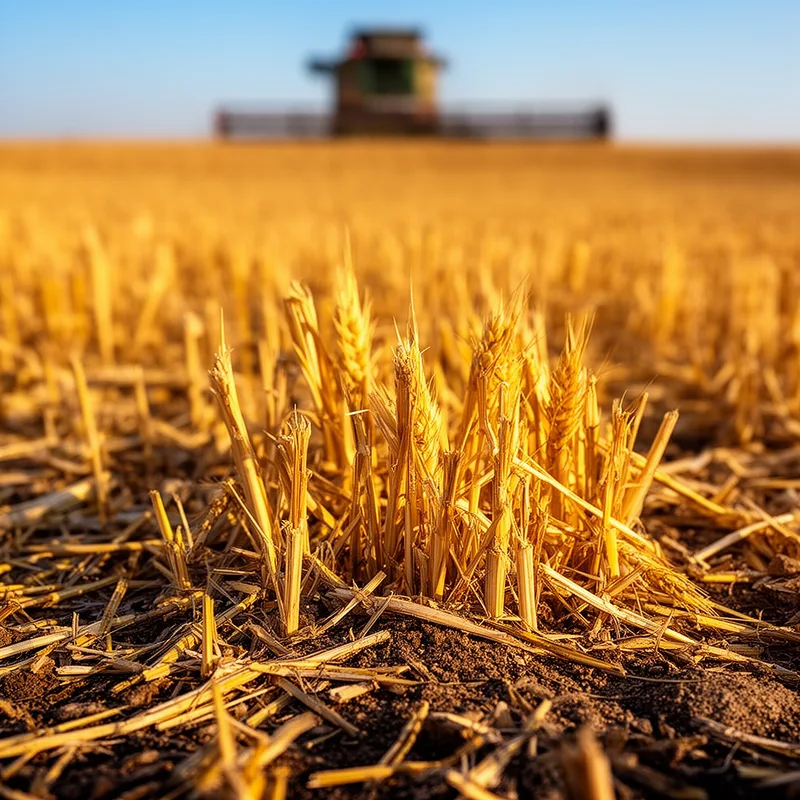
stubble
 5
5.0
5
5.0

- noun
- /ˈstʌbəl/
- Specialized
- The farmer decided to leave the stubble in the field to help prevent soil erosion over the winter.
- wheat stubble
Examples
-
The headlights showed the neat rows of cornstalk stubble angling off from the wagon track.
Fiction book (1996) -
After the wheat was harvested, the field was left in stubble, showing remnants of the cut plants.
-
Some areas were already in bare stubble, but a few were as yet untouched.
Fiction book (1996) -
Soon enough, Miracle Boy will be bird-dogging whitewings out of the stubble of this field.
Fiction book (1998) -
A farmer's only defense has been to plow under the wheat stubble and alternate wheat with other crops.
Academic text (1995) -
The hills were separated by gold or already gray strips of fields: stubble and harvested fields of potatoes.
Fiction book (2000) -
Fortunately, a crop had recently been harvested, and the stubble had been plowed under for mulch.
Fiction book (1991) -
Take-all survives on barley stubble, waiting to attack the next wheat crop.
Academic text (1995) -
Farmers supplement this fodder with stubble from cereal, alfalfa, and fallow fields.
Academic text (2011) -
We almost jogged through the dank stubble, burrs, and gently crumbling clods that made up the firebreaks.
Fiction book (2002)
Synonyms
 27
3.2
27
3.2
The dry outer covering of a seed or grain that you remove before you eat it
 8
7.4
8
7.4
The dry outer covering of seeds that you remove before eating corn
 5
8.9
5
8.9
The dry leftover stems and leaves after a crop is harvested
 3
8.6
3
8.6
The dry outer parts of grain removed when the seeds are cleaned
How Large

Surface Forms
Morphology
Etymology
Stubble comes from an old word like stub or stump meaning 'a short piece left behind', and it first meant the short stalks left in a field after the harvest. That's why stubble means the rough bits of stalk and seed that stay after crops are cut.