
stroma


 1
9.9
- noun
- /ˈstroʊmə/
- Specialized
- In histology, the stroma serves as the supporting tissue that surrounds the functional components of the organ.
- fibrous stroma
- lymphoid stroma
- fibroblastic stroma
Examples
-
Histology confirmed features of dense-core granules, tumor cells separated by fibrous stroma, and cells showing pleomorphism and hyperchromatism.
Academic text (2008) -
In addition, ducts and sometimes acini with occasional central necrosis are seen in the surrounding stroma.
Academic text (2006) -
So I'm going to draw it such that this here is the stroma side of the membrane.
-
Fibrovascular background stroma separating the different tissue types.
-
The fibrous stroma featured a considerable amount of edema, but it lacked smooth muscle.
Academic text (2008) -
Histologic analysis reveals giant cells around a fibrous stroma and some degree of cellular atypia.
Academic text (2005) -
Areas of low cellularity with myxoid stroma were common and blended inconspicuously with denser cellular areas.
Academic text (1996) -
Low-power view (A) reveals ganglion cells and axons surrounded by fibrous stroma and adipocytes.
Academic text (2010) -
Histologic evaluation of the lesion demonstrated normal myelinated axon fascicles separated by fibrous stroma and adipose tissue.
Academic text (2010) -
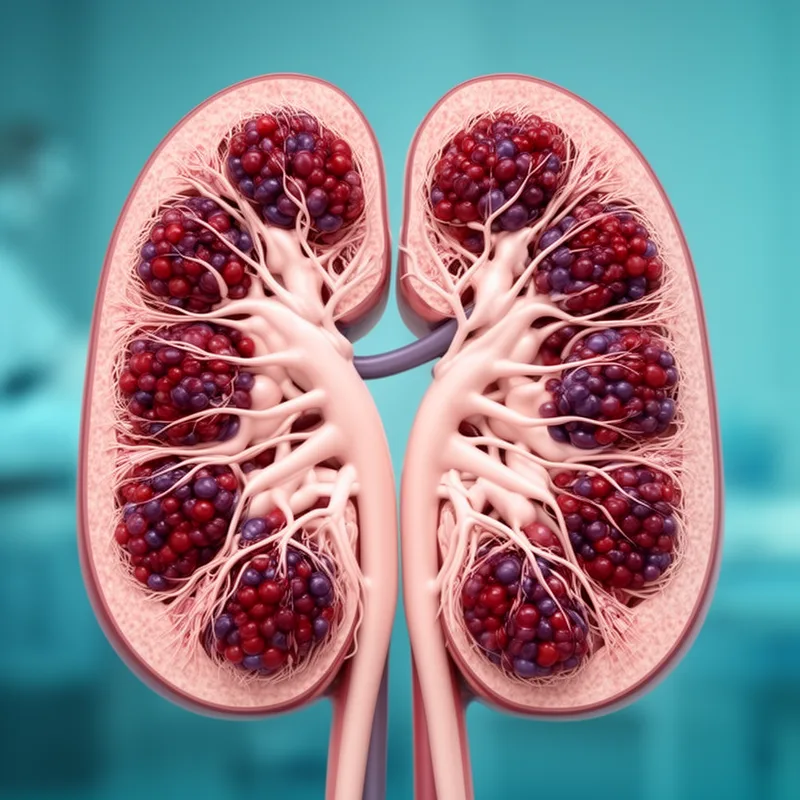
The stroma of the kidney provides structural support while allowing for filtration and waste removal.
Synonyms
 6
4.3
Tissue that supports and joins parts of the body like tendons and ligaments
 1
9.9
A thin layer of body tissue that covers an organ or blood vessel
Surface Forms
Etymology
Stroma comes from a Greek word stroma that means 'bed' or 'layer'. So a stroma in an organ is the 'bed' or supporting layer that holds the working cells.