
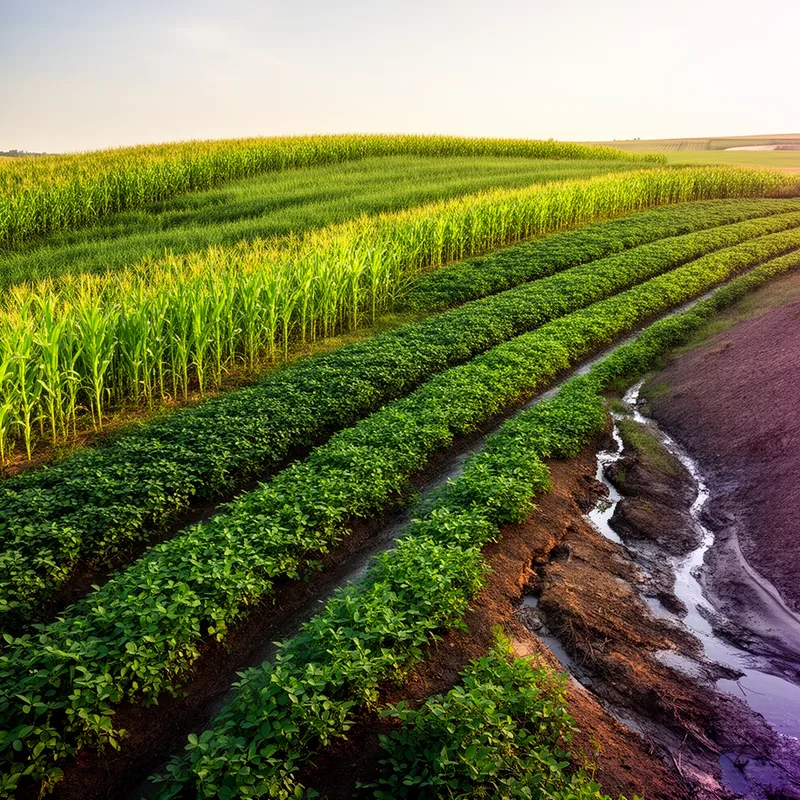
strip cropping
- noun
- /strɪp ˈkrɒpɪŋ/
- Specialized
- Farmers use strip cropping to plant crops in narrow strips that follow the land's contours to help prevent soil erosion.
Examples
-
Utilized more on estates than on peasant holdings, strip cropping never reached the desired level of adoption (St. Vincent Agricultural Department 1955b, 56).
Academic text (1997) -
For some activities, such as strip cropping, peasants received cash payments.
Academic text (1997) -
By implementing strip cropping, the agricultural team was able to significantly reduce soil loss during heavy rains.
-
The practice of strip cropping helps maintain soil health while maximizing crop yield by managing water runoff.
How Protective


Surface Forms
Morphology
The compound is directly compositional: 'strip' (a narrow piece of land) combined with 'cropping' (growing crops) straightforwardly denotes growing crops in narrow strips. This agricultural compounding is a transparent, cross-linguistically common logic, so a B1 learner who knows the constituents can infer the MWE's meaning.
Etymology
The farming term strip cropping comes from planting long, narrow strips of different crops across a hill or field. These strips act like small barriers that slow rain and keep soil in place, so strip cropping means planting this way 'to stop soil from washing away'.