
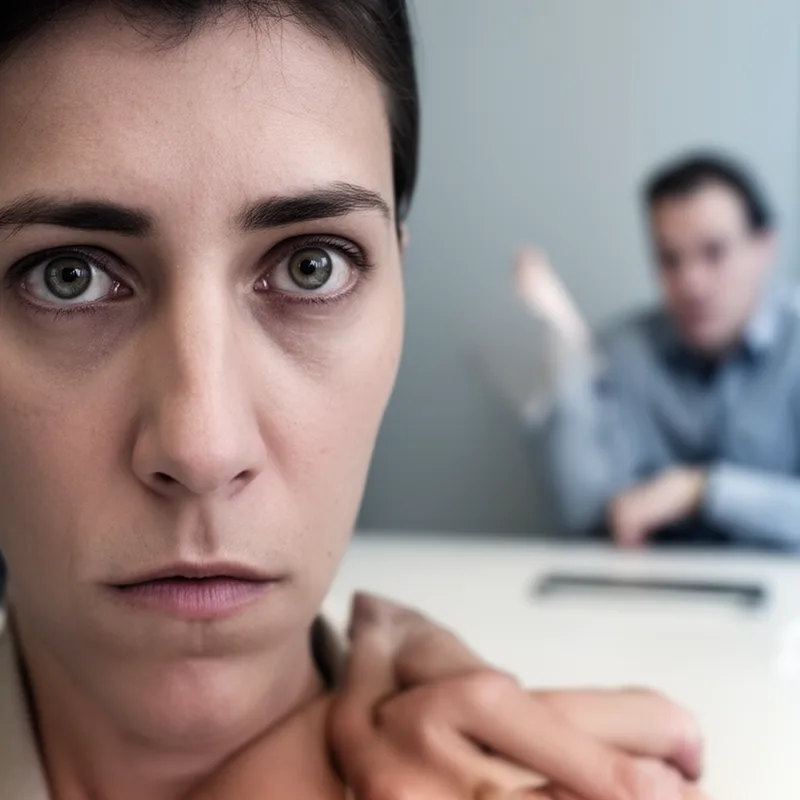
stoniness of gaze
- noun
- The stoniness of her gaze made it clear that she would not compromise.
Examples
-
Her voice faltered when she met the stoniness of his gaze across the table.
-
Under the stoniness of his gaze, everyone in the room fell silent.
-
Her stoniness of gaze made it difficult to read her emotions.
-
The detective noticed the stoniness of gaze in the suspect's eyes.
-
The stoniness of his gaze reflected his determination to remain indifferent to the criticism.
-
Everyone felt intimidated by the stoniness of her gaze during the meeting, as she seemed completely unapproachable.
-
She tried to remain calm, but the stoniness of his gaze made her feel uneasy and judged.
Synonyms

 34
3.9
34
3.9

A face that shows no feeling, often to avoid laughing
 12
4.8
12
4.8
A face that shows no feeling so others cannot tell what you feel
 2
4.6
2
4.6
A fixed unfriendly look that shows anger or disapproval


 1
5.1
1
5.1
A serious face that shows little or no emotion
 1
8.5
1
8.5
A lack of visible feeling or reaction

A hard, cold way of acting that shows no emotion

A hard, cold look that shows no feeling

Strong, steady attention that shows determination

No feeling shown on a person's face, voice, or actions

A state of showing little or no feeling

A lack of strong feeling or emotion when something happens

A state of not showing strong feelings when good or bad things happen

A lack of visible emotion
Antonyms

How Emotionless
 2
4.6
2
4.6
Surface Forms
Morphology
The meaning is directly compositional: 'stoniness' (emotional hardness) applied to 'gaze' (a look) yields an emotionless or unyielding look, so the overall sense is derivable from the constituents. The 'stone' metaphor for hardness and the 'X of Y' modifier pattern are cross-linguistically common, making this phrase immediately comprehensible to a B1 learner who knows the component words.
Etymology
Stoniness of gaze comes from the image of someone's eyes being like hard, cold stone. Here stoniness means stone-like hardness and gaze is the look, so the phrase means 'a firm, emotionless look'.