

stone crab
 1
4.1
1
4.1

- noun
- /stoʊn kræb/
- US
- Hey, stone crab-- you love stone crab, huh?
- stone crab claws
- stone crab season
Loading YouTube…
Watch on YouTubeJust come down here, eat some stone crab, eat some steak, like have you know, just enjoy yourself.
- Just come down here, eat some stone crab, eat some steak, like have you know, just enjoy yourself.
Examples
-
And I'll have them send you up a shipment of lobsters and stone crabs.
-
Their chef, Alfred DuPont, flies in stone crab claws... fresh from Florida every day.
-
You could stop eating stone crab.
-
Just come down here, eat some stone crab, eat some steak, like have you know, just enjoy yourself.
-
Hey, stone crab-- you love stone crab, huh?
-
You know, when we talked about making it, we were gonna hit it big... ...move to Florida, we were gonna swim, eat stone crabs.
-
It's stone crab season.
Blog text (2) -
Never aggressive, now she became terrified of nearly everything: termites, fire ants, stone crabs.
Fiction book (2001) -
I know a place that serves the best stone crab claws on the planet.
-
Winter is stone crab season, and you can get a platter of claws come rain, hail, sleet, or snow.
Synonyms
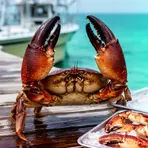
A large edible crab with strong claws found on the southern United States coast, especially Florida, called the stone crab
Surface Forms
Morphology
The compound 'stone crab' is directly compositional: combining 'stone' (hard rock) with 'crab' signals a type of crab characterized by a hard, stone-like shell or association with rocky habitat, so a B1 learner who knows both words can infer it refers to a particular edible crab. This follows common noun-noun naming patterns and is cross-linguistically transparent.
Etymology
Stone crab: The name stone crab comes from the crab's very hard shell and strong claws that feel like stone, so people began calling the animal a stone crab. That's why the word now refers to this large crab eaten as 'seafood'.