
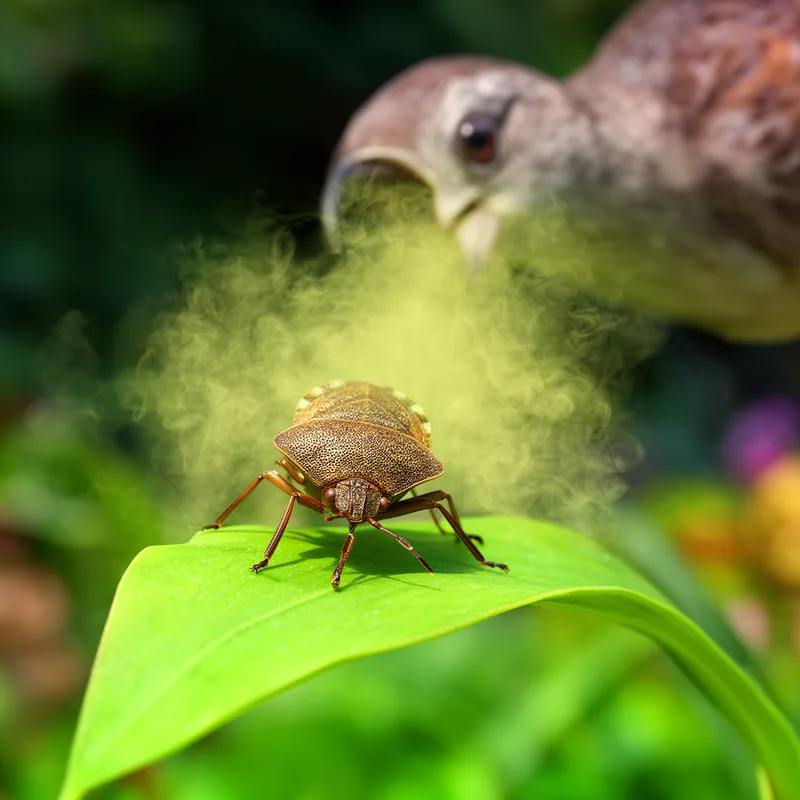
stink bug
 1
3.5
1
3.5

- noun
- /stɪŋk bʌg/
- US
- During the summer, we often find stink bugs invading our home in search of shelter.
- brown stink bugs
- predatory stink bugs
Examples
-
Another was spying on my husband and one-year-old as they cleaned the backyard this weekend, and as I'm looking, I see my baby gaze at his daddy in wonder, screaming and pointing at the stink bug he held.
Blog text (19) -
There are researchers looking at how someday a tiny parasitic wasp from Asia might reduce the stink bug population.
Blog text (3) -
Stink bugs are not a threat to property or health, but they do threaten agriculture.
Blog text (3) -
And if you didn't notice, this is the time of year stink bugs move indoors.
Blog text (3) -
Lygus and stink bugs were also problem insects, inflicting more damage in 1996 than in 1995.
Academic text (1997) -
But for now, the bugs—officially called "brown marmorated stink bugs"—are enjoying our digs.
Blog text (3) -
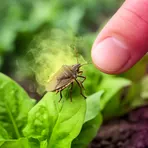
The stink bug releases a foul odor to deter predators when it feels threatened.
-
When crushed, a stink bug emits a strong smell that many people find unpleasant.
Synonyms

 1
4.4
1
4.4
A small bug that makes a strong bad smell when scared
How Smelly

Surface Forms
Morphology
The compound transparently combines 'stink' (to be objectionably bad or smelly) with 'bug' (an irritating insect), so a learner who knows both words can infer a negative, annoying-person sense. However, the meaning is a metaphorical extension (and there is also a literal insect name 'stink bug'), so the precise derogatory nuance may not be fully predictable without exposure.
Etymology
Stink bug names an insect that releases a strong, bad smell when it feels threatened. The name is a simple image: stink (the bad smell) and bug (the insect), so it means 'an insect that smells bad to protect itself'.