
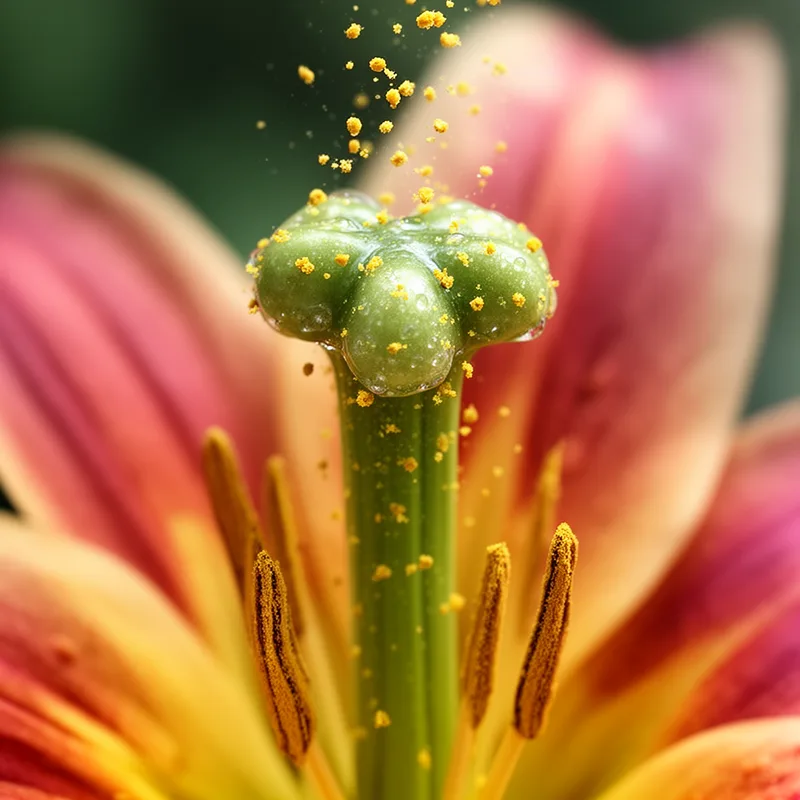
stigma
 1
6.9
1
6.9

- noun
- /ˈstɪɡmə/
- Specialized
- When pollen lands on the stigma, it begins the process of fertilization in the flower.
- pollen and stigma
Examples
-
The stigma is designed to capture pollen grains effectively for successful reproduction.
-
You need multiple bits of pollen to land on the stigma in order to set fruit.
-
In most terrestrial and aquatic angiosperms, transfer of pollen to stigma is disrupted by contact with water.
Academic text (1996) -
Red, little, spiky stigmas of the female flower... dangling, yellow male catkin... yellow pollen flying from one to the other.
-
In P. pusillus, self-pollination occurs when pollen from dehisced anthers moves to the stigma across a bubble surface.
Academic text (1996) -
In some water lily species, the stigma (the female parts of the flower) becomes hidden by bending itself over the center of the flower or by being covered by the stamens (the pollen-producing male part of the flower), which bend over it (Hirthe & Porembski 2003).
Academic text (2017) -
Such unisexual flowers present further challenges for successful pollination and seed set because pollen must reach small and often distant receptive female stigmas via a highly inefficient vector (water currents).
Academic text (2012) -
In flowering plants, the stigma plays a crucial role in the fertilization process by receiving pollen.
Compounds

Negative ideas that lead people to treat those with mental health problems unfairly
Surface Forms
Etymology
Stigma comes from a Greek word stigma that meant 'a mark' or 'a point', like a little spot. So a flower's stigma is the sticky tip — the small spot where pollen lands and begins to grow.