
stereotypy
- noun
- /ˈstɛrɪəˌtɑpi/
- Archaic
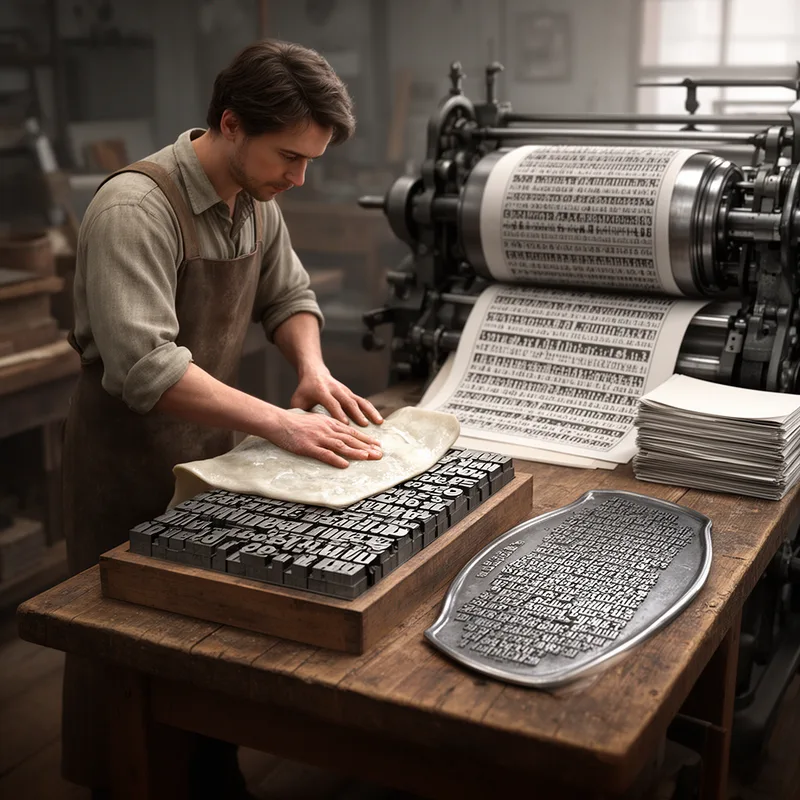
- By using stereotypy, printers could create many identical copies of a page quickly and efficiently.
Examples
-
Before digital printing, stereotypy was an essential technique for mass-producing printed materials.
-
The invention of stereotypy revolutionized the way books and newspapers were produced in the 19th century.
-
The stereotypy process revolutionized printing in the 19th century.
-
Many books were published using stereotypy techniques.
-
The invention of stereotypy revolutionized the way books and newspapers were produced in the 19th century.
-
By using stereotypy, printers could create many identical copies of a page quickly and efficiently.
-
Before digital printing, stereotypy was an essential technique for mass-producing printed materials.
Synonyms

Preparing thin metal or plastic plates used for printing

The process of making printing plates from photos to print images
Surface Forms
Morphology
stereotypy = stereotype (opaque) = stereo + typ + y
The historical printing process meaning is not directly inferable from the components 'stereo' and 'type'.
Etymology
Stereotypy comes from the Greek roots stereos 'solid' and typos 'type' and originally named a printing method where printers made a solid plate from set type to make many identical pages. This is why the printing sense of stereotypy is about making exact copies quickly.

