
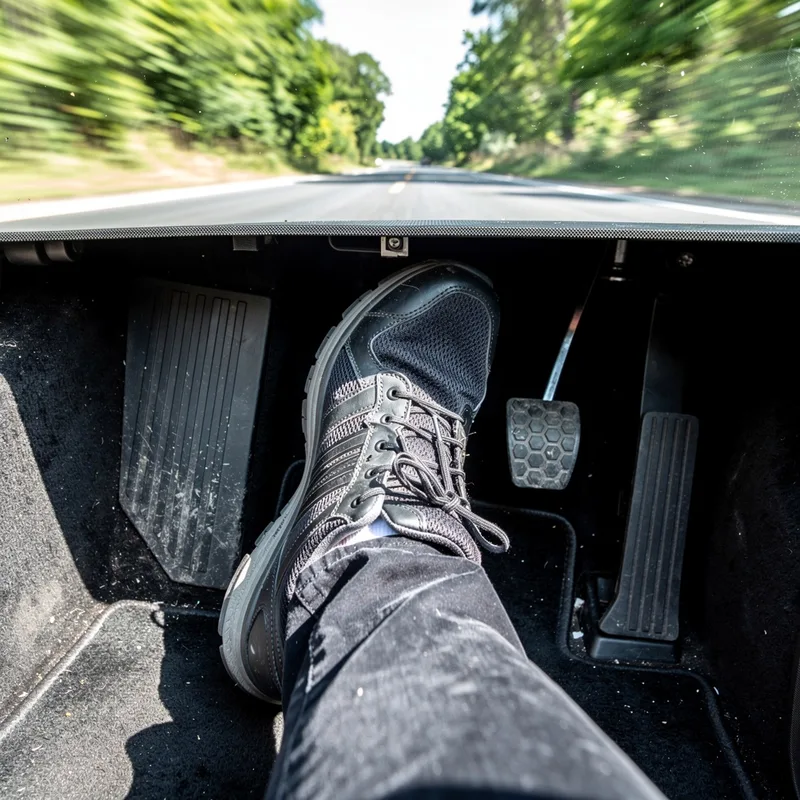
to step on it
 35
5.2
35
5.2

- phrasal verb
- Informal
- The traffic is picking up, so we need to step on it to get to the airport on time.
- please step on it
- come on, step on it
- go ahead and step on it
Loading YouTube…
Watch on YouTubeAnd unbeknownst to us, while we weren't able to car Jack him because he stepped on it and got away, he later followed me but followed me all day.
- And unbeknownst to us, while we weren't able to car Jack him because he stepped on it and got away, he later followed me but followed me all day.
Examples
-
Just step on it.
-
Please step on it.
-
- Tell him to step on it.
-
You better step on it, Mr. French.
-
I told my people to step on it.
-
And you gotta step on it.
-
"Well, step on it, Buddy.
Fiction book (2000) -
Floor it, Cody, step on it!
-
You guys gotta step on it to Bixby.
Fiction book (1990) -
Daley: Step on it, driver!
Fiction book (1998)
Synonyms
 637
1.0
637
1.0
To move or act more quickly to avoid being late
 548
1.0
548
1.0
To move or act quickly because a situation needs it
 512
6.7
512
6.7
To hurry so you do something faster, often to avoid being late
 137
1.0
137
1.0
To move or travel quickly, often faster than allowed
 118
3.2
118
3.2
Climb quickly using your hands and feet on steep or rough ground
 97
1.0
97
1.0
To make someone move or work faster than they want
 91
1.0
91
1.0
To move or work very quickly to reach a goal
 54
3.1
54
3.1
To move quickly with short, hurried steps because you feel afraid or rushed
 29
2.8
29
2.8
Move a short distance quickly, often to make room or hurry
 17
8.0
17
8.0
Press the gas pedal all the way to make the car go very fast
 9
3.7
9
3.7
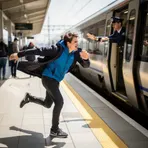
To press the pedal in a car to make it go faster or hurry to finish something
 9
6.5
9
6.5
To hurry when someone tells you to
 8
3.6
8
3.6
Press the car pedal to make it go faster
 7
6.3
7
6.3
To drive or work as fast as possible, often to finish something
 7
3.9
7
3.9
Move quickly to do something
 5
7.2
5
7.2
Leave quickly to go somewhere or to avoid trouble
 2
9.9
2
9.9
To go quickly to a place, often used in old writing
 1
7.7
1
7.7
To move quickly on foot
 1
9.0
1
9.0
Move quickly on foot to escape or reach a place fast
 1
2.7
1
2.7
To move quickly in one direction
 1
8.2
1
8.2
To move quickly with short, hurried steps when you feel nervous


 1
8.6
1
8.6
Hurry up and start doing something
 1
7.2
1
7.2
To run or move very quickly without control

To hurry to do something so you do not miss a good chance

To move very quickly, usually by running or driving
To move quickly by car or on foot

To move very quickly in a straight, forceful way

Move very fast along a street or path
Antonyms


How Fast
- Informal
17
8.0

- Informal
9
3.7
- Informal
35
5.2
161
2.5
∞
1.0
17
5.0
Surface Forms
Morphology
The phrase relies on the literal sense of 'step on' (to press with the foot) which can be mapped onto pressing a car's accelerator, giving a physical-image basis for 'go faster'. However, the vagueness of 'it' and the conventionalized shift from literal pressing to the idiomatic 'hurry up/press the gas' means the precise sense is not fully predictable for a B1 learner who only knows the constituent words.
Etymology
The phrase step on it may come from the simple picture of pressing a car pedal: you step on it, the gas pedal, to make the car go faster. That's why today it means 'to go faster' or 'hurry up'.