
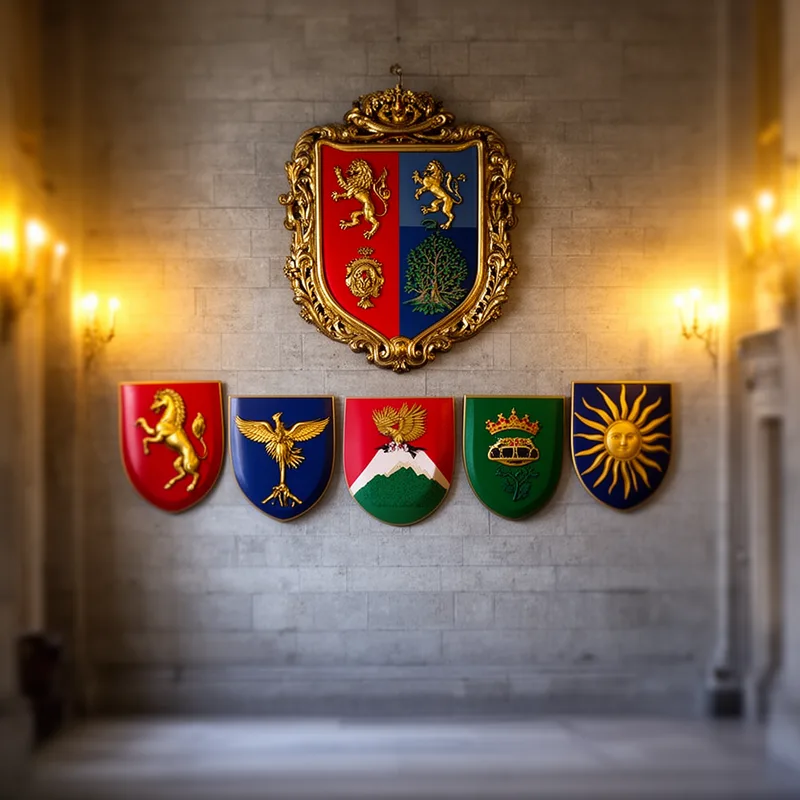
stemmata
- noun
- /ˈstɛmɪtə/
- Archaic
- Historians studied the stemmata to trace the lineage of the royal house.
Examples
-
Several stemmata adorned the entrance, each representing a different noble clan.
-
The ancient family proudly displayed their stemmata in the great hall.
-
The stemmata of noble families are often displayed in grand halls.
-
Many stemmata feature intricate designs and symbols.
-
Historians studied the stemmata to trace the lineage of the royal house.
-
Several stemmata adorned the entrance, each representing a different noble clan.
-
The ancient family proudly displayed their stemmata in the great hall.
Synonyms

 9
8.2
9
8.2

A design used to show who a person, family or group is
 1
7.9
1
7.9
Official symbols that represent a family, city, or organization, often shown on a shield


 1
9.9
1
9.9
A shield that shows a family's coat of arms

A picture or symbol on a shield that shows who a family is
Surface Forms
Etymology
Stemmata comes from the Latin word stemma, which meant a 'garland' or 'wreath' used to show family honor, like a special badge. Because these garlands stood for a family's history, stemmata came to mean the 'coats of arms' or emblems that show a family's identity.