
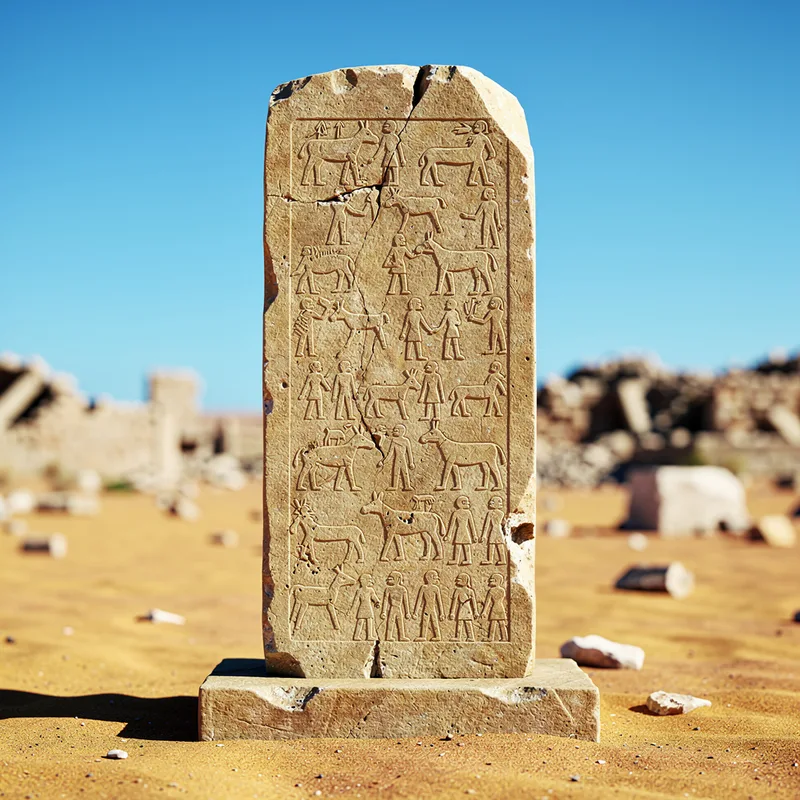
stele
 3
9.9
3
9.9

- noun
- /ˈstɛli/
- Specialized
- The funerary steles are placed above tombs generally to mark the presence of the tombs.
- funerary stele
- erected stele
- large stele
Examples
-
There's no record of it on any stele.
-
Within a few decades, the cities were abandoned, construction ceased, and no more steles were erected.
Academic text (1990) -
Now, ladies and gentlemen, a magnificent stele of the Monkey God.
-
The square stele is carved with the figures of sixteen.
Academic text (2004) -
I can make out an astrolabe, a large stele, and a throne amid the ruins.
Academic text (2009) -
Darius commemorated his achievements with a large granite stele found near Suez in Egypt.
Academic text (2010) -
The scan of one monument in particular, Stele 65 at Kaminaljuyu, has revealed previously unknown carvings that had been obscured by later glyphs.
Academic text (2009) -
The archaeologists discovered a beautifully inscribed stele in the ruins of the ancient city.
-
The large stele stood prominently in the park, commemorating the heroes of the past.
-
Visitors to the museum admired the intricate carvings on the stele that depicted historical events.
Synonyms
 1
9.9
1
9.9
A tall stone with writing that honors a person or event from long ago
How Tall

Surface Forms
Etymology
Stele comes from the Greek stēlē, which means 'standing stone' or 'pillar'. In archaeology, a stele is an upright stone slab often carved with writing or pictures, so it works as a lasting marker or monument.