
steatite
- noun
- /ˈstiːəˌtaɪt/
- Specialized
- The museum displayed numerous decorative ornaments made of steatite, highlighting the craftsmanship of the region.
- steatite source
- ivory and steatite
Examples
-
It became clear that Harappans were exploiting steatite sources based on aesthetic preferences rather than proximity.
Academic text (2008) -
Objects created from steatite—a rock primarily composed of talc—make up nearly 40 percent of Harappa's stone and metal artifacts.
Academic text (2008) -
Las Bela could have been an important steatite source.
Academic text (2008) -
Black Hand sat to one side, carefully tamping willow bark into his steatite stone pipe before using a twig to light it.
Fiction book (1992) -
Steatite can be found naturally in every major highland region surrounding the Indus Valley, but the richest deposits by far are in southern Rajasthan, India.
Academic text (2008) -
Around 800 statues in steatite (soapstone) were found together in the bush near the village of Esie.
Academic text (2000) -
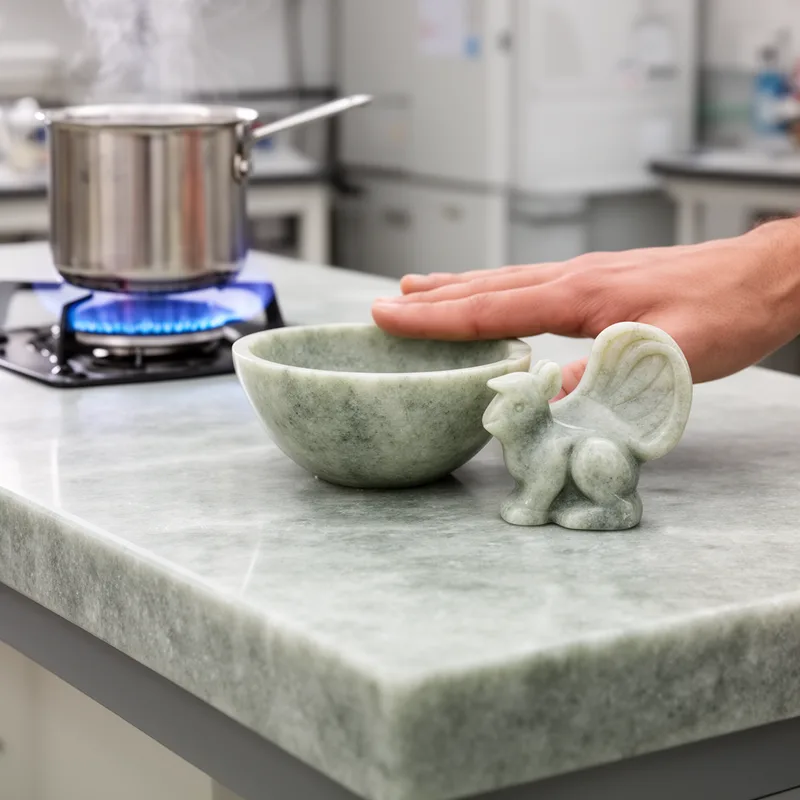
The artist carved a beautiful figure from steatite, showcasing its smooth texture and intricate details.
-
Ancient people used steatite to create durable and heat-resistant tabletops for their cooking areas.
Synonyms

 2
6.5
2
6.5

A soft heavy rock with a smooth feel used for carving, fireplaces, and ornaments

A soft heavy stone with a smooth soapy feel used for carving vases and hearths

A soft, smooth stone with a soapy feel that people use to carve fireplaces, tables, and decorative items
Surface Forms
Morphology
steatite = steat (opaque) = steat + ite
The combining form 'steat' is not a productive standalone English word and the mineral-forming suffix '-ite' is specialized, so learners cannot reliably infer the meaning from the parts.
Etymology
Steatite comes from an old Greek root steat- meaning 'fat' or 'tallow', so it was thought of as a 'fat' stone. It is also called soapstone because the rock feels smooth and soapy, and that soft, soapy feel explains why people use it for hearths, tabletops, and carved ornaments.