
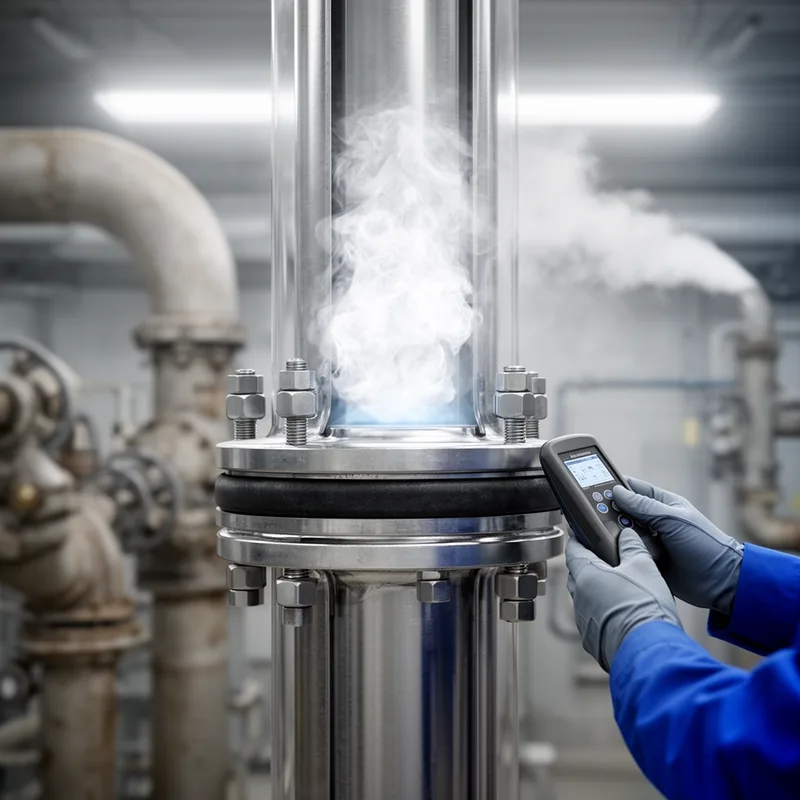
steamtightness
- noun
- /ˈstiːmˌtaɪtnəs/
- Specialized
- The steamtightness of the kettle ensures no steam escapes.
Examples
-
Poor steamtightness can lead to energy loss and reduced efficiency in power plants.
-
Engineers check the steamtightness of the system before starting the turbines.
-
The old pipes had to be replaced to improve the steamtightness of the heating system.
-
Is the steamtightness of this container sufficient?
-
Engineers check the steamtightness of the system before starting the turbines.
-
Poor steamtightness can lead to energy loss and reduced efficiency in power plants.
-
The old pipes had to be replaced to improve the steamtightness of the heating system.
Synonyms


 1
4.6
The state of not letting air move in or out
Antonyms


How Sealed

Surface Forms
Morphology
Etymology
The word steamtightness comes from steam and tightness, so it literally asks how well something keeps steam inside. So, good steamtightness means an object is sealed so 'steam cannot escape', like being 'airtight' but for steam.