
station
 ∞
2.7
∞
2.7

- noun
- /ˈsteɪʃən/
- Specialized
- Several studies of television news established that local stations introduced extended newscasts, thirty minutes and longer, before the networks.
- a radio station
- a television station
- a news station
Loading YouTube…
Watch on YouTubeAnd it's also the hometown of our station, WCBSCBS, too.
- And it's also the hometown of our station, WCBSCBS, too.
- Well, what if you turn that dial to a station you actually like?
- Oh my God, with local news station WRGB.
- So a pirate radio station is a station that is illegal.
- Let's say they sell your movie to a, you know, a cable station in Greece.
- They're going to still have the station in their car on in the weekends.
- I mean, local TV stations are doing stories about it.
- It wouldn't matter which station had the initial right to broadcast.
- So I go up to the disc jockey station, say what I want.
- And none of my affiliates or the people at the public broadcast station PBS.
Examples
-
Has anybody talked to the news stations?
-
I mean, local TV stations are doing stories about it.
-
If you want a song played, call the radio station right now.
-
Well, what if you turn that dial to a station you actually like?
-
Well, Cook sent a letter to the station saying I'm demand free, equal time.
-
I'm gonna turn on the college station.
-
There's this one station I listen to.
-
It wouldn't matter which station had the initial right to broadcast.
-
At least nine local stations introduced a forty-five-minute evening newscast well before the network expansion.
Academic text (2017) -
The local radio station broadcasts news every hour.
Synonyms
 349
1.6
349
1.6
A television station that shows programs like news
 64
5.3
64
5.3
A frequency used to send radio and television programs
 13
4.1
13
4.1
A range of waves used to send wireless signals, for example in radios or phones
 11
1.1
11
1.1
A television station and the programs it shows
 6
2.1
6
2.1
A TV station that shows programs on one number
 5
4.5
5
4.5
Radio signals used for television, radio, and short-range communication
 5
4.0
5
4.0
A band of radio waves used for TV, mobile phones, and two-way radios
 2
4.2
2
4.2
A range of radio waves used for one purpose, like TV or radio
 1
3.7
1
3.7
The radio and television signals that carry programs to many people

Working with radio waves to send or receive wireless signals
Compounds

 180
1.3
180
1.3
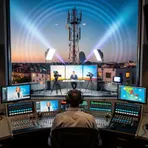
A place that makes and sends shows you hear on radio or online, like news and music

- Specialized
131
3.9
A large place built in space where people live and work for science








- Specialized
15
7.1
A place often on a ship where sailors or soldiers go to prepare for fighting

- Specialized
11
2.7
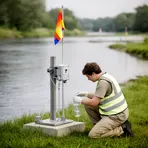
A place with instruments and people who measure and record the weather


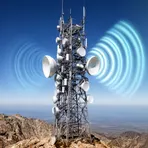
- Specialized
7
3.7
A device that picks up and sends a signal to make it stronger or reach farther


- Specialized
5
3.2
A building with machines that move water or sewage to other places

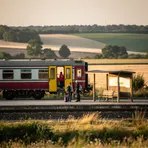

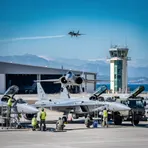

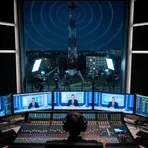



 1
3.7
1
3.7
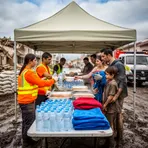
A portable rechargeable battery that gives electricity to devices when there is no power



- Specialized
 1
4.4
1
4.4
A place where people watch and record weather, animals, or stars

- Specialized
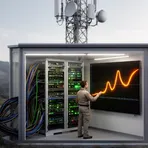
A place with equipment that makes weak communication signals stronger




- Specialized
A computer terminal connected to a system over a network, not directly


A place in another country where church workers live to teach and help local people




An image in a church showing a part of Jesus's final journey to the place where he died
How Wide

Surface Forms
Etymology
Station comes from the Latin word statio, from stare which means 'to stand', the same root as stand. Think of a radio or TV station as a place where equipment and people 'stand' to send a signal, which is why the word means a fixed place for broadcasting.