

state of nature
 3
8.1
3
8.1

- noun
- Specialized
- For Hobbes, men in the state of nature are all equal.
- human state of nature
- state of nature condition
- savage in the state of nature
Loading YouTube…
Watch on YouTubeYet they call it the state of nature.
- Yet they call it the state of nature.
- Hobbes says that argument works regardless of whether the state of nature is actually something that happened.
- And he's like, in a state of nature, there's no societies, there's just individuals.
- There's lots of different versions, but the basic idea is imagine a time before society called the state of nature, where there are no laws.
- Well, we give up some of our rights in the state of nature.
- Difference was interpreted as absence, a blank canvas, a state of nature.
Examples
-
And Hobbes points out that in the state of nature, people are all roughly equal in the following relevant way.
-
The point is made with resort to the common parable of a state of nature where individuals fend for themselves.
Academic text (1996) -
Well, in order to answer that question, it helps to remember what the state of nature is like.
-
Napoleon did not believe in the "state of nature" for one thing.
Academic text (2000) -
In these respects, they may be useful for the study of the human state of nature.
Academic text (2000) -
In this section, I shall focus on the issue of scarcity in the state of nature.
Academic text (1990) -
There's lots of different versions, but the basic idea is imagine a time before society called the state of nature, where there are no laws.
-
Well, in a state of nature, Hobbes says there are no moral norms.
-
Like many of his contemporaries, Bacon saw humans in the state of nature as savage and barbaric.
Academic text (1999) -
In a state of nature, humans relied solely on their instincts for survival.
Synonyms
 10
4.1
10
4.1
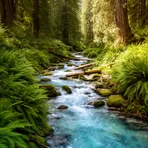
The condition of land, water, or wildlife left unchanged by people
Antonyms

How Civilized

Surface Forms
Morphology
The meaning is directly compositional: 'state' (condition) + 'of' (genitive link) + 'nature' (the natural world) yields 'a condition of the natural world' or a pre‑civilized condition. This straightforward noun-of-noun construction is common cross-linguistically and in English, so a B1 learner who knows the constituent words will very likely infer the intended meaning.
Etymology
State of nature comes from early thinkers who imagined life before governments, laws, and cities. They pictured wild land and people living without rules, so the phrase now means 'a wild and primitive condition' or 'life before civilization'.