
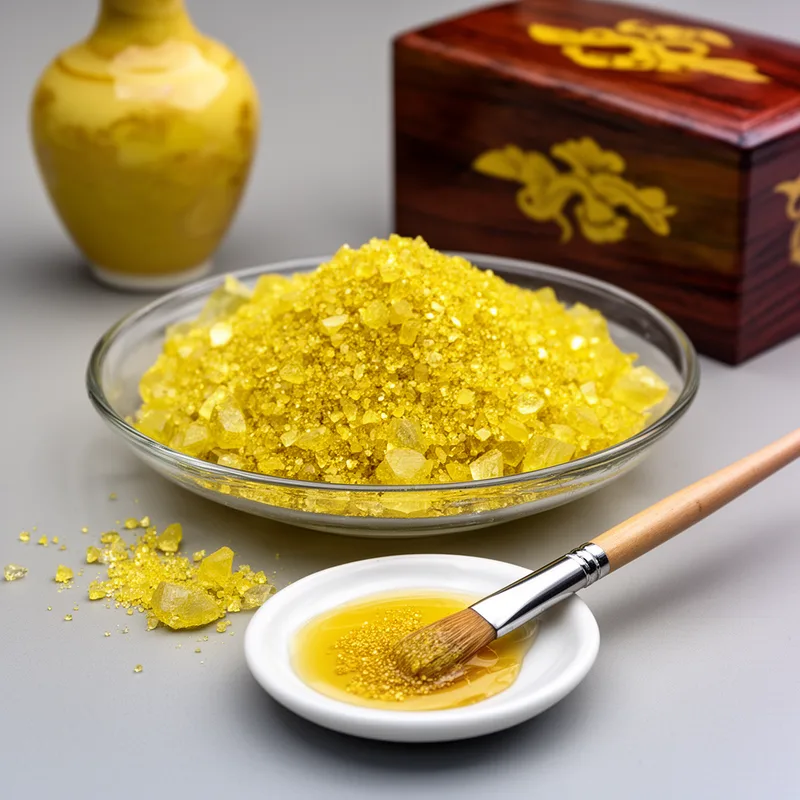
stannic sulfide
- noun
- /ˈstænɪk ˈsʌlfaɪd/
- Specialized
- The delicate yellow color of the vase was achieved using stannic sulfide as a pigment.
Examples
-
Traditional lacquerware sometimes features decorations in which stannic sulfide is suspended for a rich sheen.
-
Researchers experimented with stannic sulfide to develop new shades for ceramic glazes.
-
The artist used stannic sulfide in her latest painting.
-
Can you explain what stannic sulfide is?
-
The delicate yellow color of the vase was achieved using stannic sulfide as a pigment.
-
Researchers experimented with stannic sulfide to develop new shades for ceramic glazes.
-
Traditional lacquerware sometimes features decorations in which stannic sulfide is suspended for a rich sheen.
Synonyms

A bright yellow powder used to make art and frames look like gold
Surface Forms
Morphology
The name is built by standard chemical composition: 'stannic' denotes tin (in a specific oxidation state) and 'sulfide' denotes a sulfur compound, so the phrase transparently denotes a tin–sulfur compound. This follows predictable scientific naming conventions (cross-linguistically similar), so a learner who knows both constituents can infer it refers to tin sulfide even if they don’t know the exact formula or pigment properties.
Etymology
Stannic sulfide is a name made from two parts: stannic (from an old word for 'tin') and sulfide (a compound of 'sulfur'), so the name points to a tin-and-sulfur substance. It forms bright yellow crystals, so it has been used as a 'pigment' to give lacquer and ceramics a warm yellow color.

