
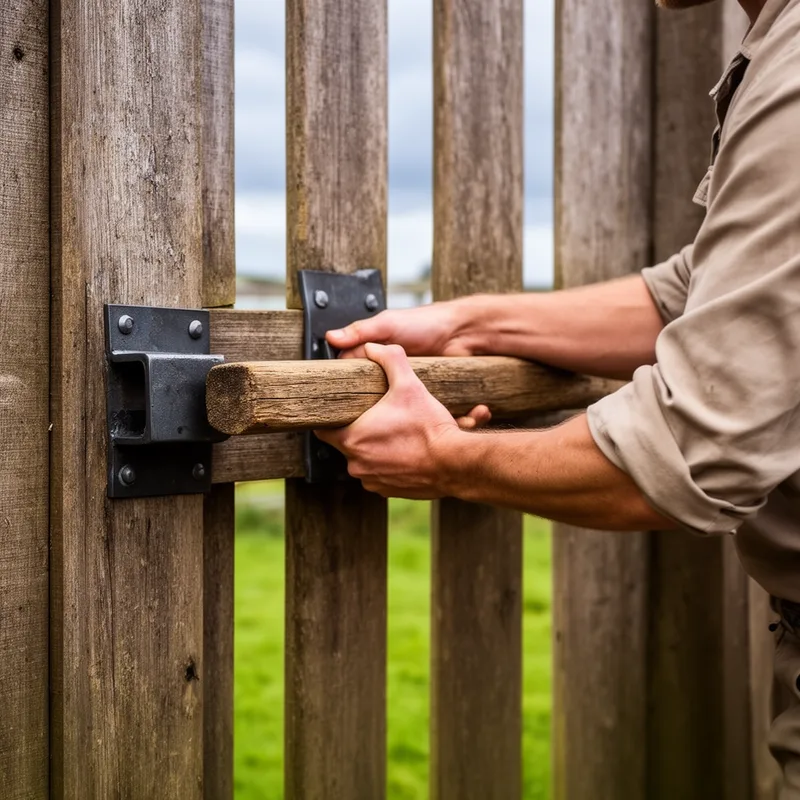
to stang
- verb
- Archaic
- They stang the barn doors with a heavy pole to keep out the wind.
Examples
-
Before leaving, she stanged the gate to make sure no animals could get in.
-
During storms, villagers would stang their shutters for extra protection.
-
Please stang the door shut.
-
He stangs the gate every evening.
-
They stang the barn doors securely with a strong pole to protect against the storm.
-
Before they went on vacation, they stang the shutters to prevent any damage from the wind.
-
To ensure the animals stayed in, she always stang the gate tightly every evening.
Synonyms
 58
2.5
58
2.5

To fasten a door or gate with a small metal part
 47
3.3
47
3.3
Fasten something tightly to keep it from moving
 34
2.8
34
2.8
To fasten a door or gate with a sliding metal bar
 7
2.0
7
2.0
To fasten something using a small pin
How Secure

Surface Forms
Etymology
Stang as a verb comes from the same idea of a 'pole' and means to put a bar across a door or gate to hold it shut. So to stang a door is simply to fasten it with a pole or bar.