
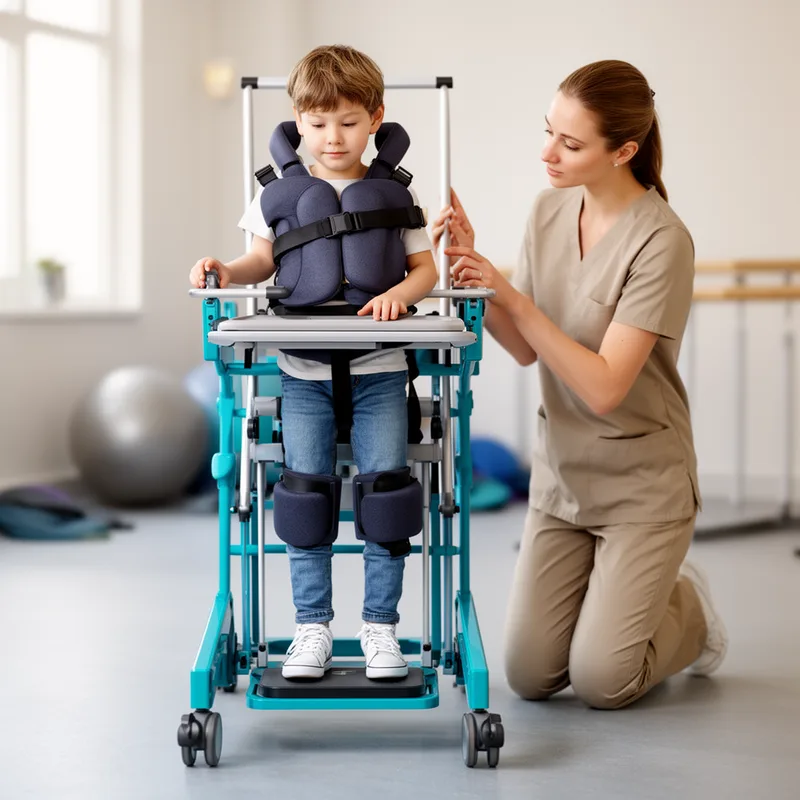
stander
- noun
- /ˈstændər/
- Specialized
- After several weeks of using the stander, he was able to stand on his own for a few minutes at a time.
Examples
-
Text and still images, as might be used in a print or e-text, may be sufficient to show things that are actual devices for daily living and physical abilities, such as wheelchair, stander, adapted cup, bathtub person lifter, etc., but are not sufficient to illustrate the dynamic function of devices, computer software, and mobile device apps that support sensory, cognitive, or academic functioning.
Academic text (2015) -
He'll also get a stander or mobile stander, I would guess around 18 months old (depends on doctors).
Blog text (18) -
The therapist adjusted the stander to help the child maintain an upright position during the rehabilitation session.
-
Using a stander can greatly improve mobility for individuals in therapy, allowing them to participate more actively.
Antonyms


How Supportive

Surface Forms
Morphology
Etymology
Stander comes from the verb stand ('to be on your feet') plus the ending -er that often means 'a thing that'. So a stander is a device or frame that helps a person 'stand' during therapy and keeps them upright.