

staggerbush
- noun
- /ˈstæɡərˌbʌʃ/
- US
- In spring, the staggerbush produces clusters of delicate pinkish-white bell-shaped flowers.
Examples
-
Cows should be kept away from the staggerbush because it is toxic to livestock.
-
Botanists studied the spread of staggerbush in the sandy soils of the coastal plains.
-
The staggerbush is known for its beautiful flowers.
-
Farmers should be cautious around staggerbushes.
-
The staggerbush grows in sandy soil and produces beautiful pinkish-white flowers.
-
Farmers should be cautious of staggerbush, as its leaves are poisonous to livestock.
-
In the coastal plains, the staggerbush thrives, attracting various pollinators with its drooping flowers.
Synonyms
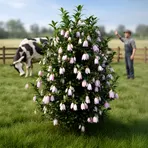
A bush with pinkish-white nodding flowers that is poisonous to farm animals

A bush from the eastern United States that loses its leaves and has nodding pinkish-white flowers poisonous to farm animals
Surface Forms
Morphology
Etymology
Staggerbush combines stagger ('to walk unsteadily') and bush, because animals that eat this shrub often stagger from its poison, so the name reminds us it is dangerous to livestock.

