

squaw grass
- noun
- /skwɔː græs/
- Archaic
- Botanists are studying how squaw grass adapts to dry mountain environments.
Examples
-
Clumps of squaw grass were scattered across the rocky hillside.
-
The hiker noticed a patch of squaw grass growing near the trail's edge.
-
The squaw grass blooms beautifully in the spring.
-
Many squaw grasses can be found in the wild.
-
Clumps of squaw grass were scattered across the rocky hillside.
-
The hiker noticed a patch of squaw grass growing near the trail's edge.
-
The squaw grass blooms beautifully in the spring.
Synonyms
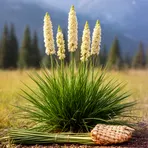
A long-living plant from western North America with stiff grasslike leaves and spikes of creamy white flowers
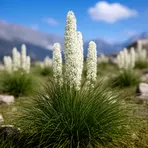
A small North American plant with grasslike leaves and tall flower spikes
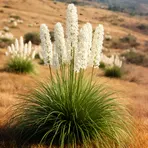
A plant that lives for many years with long leaves like grass and tall stalks of white flowers
Surface Forms
Morphology
squaw + grass
The noun 'grass' clearly signals a type of plant and a learner who knows both constituents would reasonably infer this is a kind of grass associated with the modifier 'squaw', so the basic category (a plant) is compositional. However, the specific botanical sense (species, morphology, native range) is not predictable from the parts, and the modifier 'squaw' is absent in the supplied dictionary entry and is an archaic/offensive ethnonym, which reduces straightforward predictability.
Etymology
Squaw grass likely got its name from early settlers who used the word squaw for a Native American 'woman' and who saw women gathering the plant or living near it. That's why people called the plant squaw grass, but today the word 'squaw' is seen as 'offensive' and many places use other names.

