
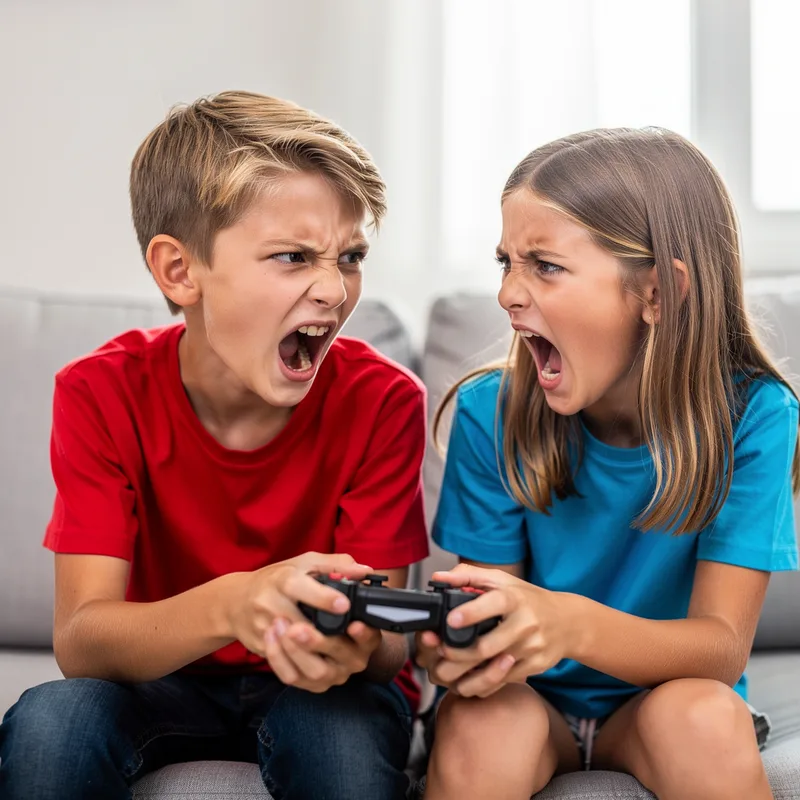
to squabble
 18
4.4
18
4.4

- verb
- /ˈskwɑbəl/
- Informal
- The children began to squabble about who got the last piece of cake.
Loading YouTube…
Watch on YouTubeSkunks come out to mate, squabble and fight late.
- Skunks come out to mate, squabble and fight late.
- I would like one good reason why I shouldn't hand you over and let them squabble over your carcass.
- Speaking of politicians using the troops, we might be going to squabble with Iran.
Examples
-
They always squabble over the smallest things, like what to eat for dinner.
-
A man, passing with his dog, threw crusts and the ducks came gobbling, squabbling, to snatch the crusts up.
Fiction book (1990) -
If they want to squabble, they can take it outside.
-
And, you know, hospital administrators and hospital physicians sometimes squabble among themselves about these issues.
-
Look at us squabbling again.
-
They squabble like small boys.
-
Also, we may squabble over who has to do what chore around the house.
Academic text (2006) -
We just buried our friend less than an hour ago, and you're sitting here squabbling like little children.
-
Dom and Benjamin squabbled over who should carry Tessa's bags into the house.
Fiction book (1994) -
If you two can't play soccer without squabbling... I do wish you wouldn't play at all.
Synonyms
 607
1.1
607
1.1
To speak angrily with someone because you disagree
 36
4.1
36
4.1
Argue again and again with someone about small unimportant things
 35
2.6
35
2.6
To argue angrily with someone about small things
 26
7.0
26
7.0
To argue about small unimportant details to avoid the main point
 25
4.9
25
4.9
To have a short, unimportant argument with someone
 13
6.3
13
6.3
To argue strongly with each other
 11
6.9
11
6.9
Talk angrily to someone because of a disagreement
 6
6.8
6
6.8
To argue loudly for a long time
 5
4.1
5
4.1
To have a small fight about something unimportant
 2
9.9
2
9.9
To argue loudly with someone and continue for a long time
 2
2.8
2
2.8
Argue with someone and feel angry or upset afterward
 1
8.2
1
8.2
To argue about very small, unimportant details


 1
9.9
1
9.9
To argue in a stubborn way about small unimportant details

To argue loudly about small unimportant things

To disagree angrily about small, unimportant things

Argue about small, unimportant details and waste time

Argue a little about something, like where to eat
Antonyms


How Argumentative

Surface Forms
Etymology
Squabble has an unclear history, but a helpful way to remember it is to imagine two people making quick, sharp noises like 'squawk' while they argue. So squabble means 'to argue' loudly about small or unimportant things.