

spotted cranesbill
- noun
- /ˈspɑːtɪd ˈkreɪnzbɪl/
- US
- Gardeners appreciate the spotted cranesbill for its delicate foliage and bright rose-purple flowers.
Examples
-
The spotted cranesbill blooms in early spring across many eastern forests.
-
We found several patches of spotted cranesbill during our nature walk.
-
Gardeners appreciate the spotted cranesbill for its delicate foliage and bright flowers.
-
Look at that spotted cranesbill!
-
The spotted cranesbill blooms beautifully in spring.
-
The spotted cranesbill blooms in early spring, adding vibrant colors to the eastern forests.
-
During our nature walk, we spotted several patches of spotted cranesbill in the meadow.
Synonyms
 6
5.0
6
5.0

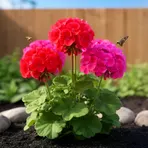
A plant with bright flowers often grown in gardens

A common wild flower in eastern North America with deeply divided leaves and purple flowers
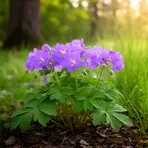
A small wild flower with divided leaves and purple flowers that grows in woods and meadows

A plant that lives for more than one year and has hand-shaped leaves and showy five-petaled flowers
Surface Forms
Morphology
This is a straightforward adjectival modification: 'spotted' describes a visible property of the noun 'cranesbill', so the phrase simply denotes a cranesbill that has spots. There is no idiomatic or metaphorical shift; given knowledge of both constituents a B1 learner would readily infer the meaning.
Etymology
Spotted cranesbill gets its name from how the plant looks. The long seed pod looks like a 'crane's beak', which explains the cranesbill part, and the flowers often have small marks, so spotted describes the petals, so the name describes this wild geranium.