
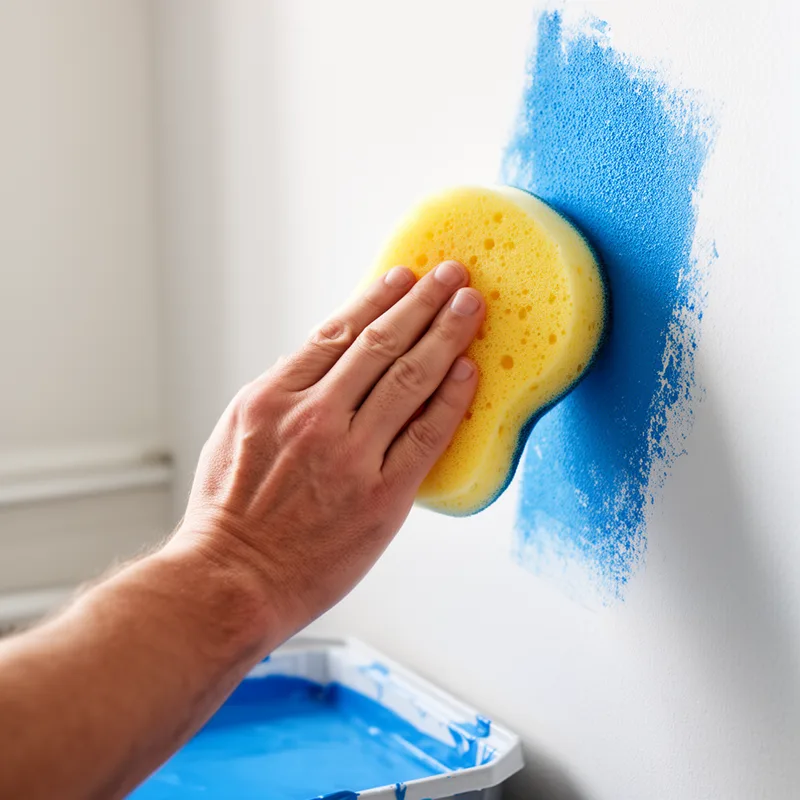
to sponge on
- phrasal verb
- /spʌndʒ ɑn/
- Make sure to sponge on the cleaner gently so as not to damage the delicate fabric.
Examples
-
She sponge on the paint carefully.
-
The artist decided to sponge on a layer of blue paint for a textured effect.
-
She sponged on water to remove the last traces of dust from the wall.
-
Don't forget to sponge on the second coat!
-
After preparing the canvas, she sponge on the paint to create a textured effect.
-
He decided to sponge on the cleaning solution to remove stains from the countertop.
-
For a smooth finish, sponge on the primer before applying the final coat of paint.
Synonyms

 854
1.0
854
1.0

To put coloured liquid on a surface to protect or change how it looks
 263
1.3
263
1.3
Put a substance onto a surface to cover it
 33
4.2
33
4.2
To cover a surface with a smooth shiny liquid that dries hard, for example on food or pottery
 6
4.5
6
4.5
Put on paint or cream quickly and without care
 1
3.8
1
3.8
To put a liquid or soft substance on a surface with a brush
 1
3.8
1
3.8
Put on a thick layer of something like paint or makeup


 1
3.5
1
3.5
To put a new layer of paint or finish on something already painted
To attach a thin decorative piece to the surface of something
Antonyms

How Much

Surface Forms
Morphology
The meaning 'to apply ... to a surface using a sponge' is directly and transparently derived from 'sponge' (to use a sponge to soak/clean/apply) combined with the preposition 'on' indicating application onto a surface. This verb + preposition composition follows common compositional patterns (apply X on Y) and would be predictable to a B1 learner who knows both constituents.
Etymology
Sponge on comes from the simple image of using a sponge to put liquid or paint on a surface by dabbing or pressing it. So, it means 'to apply a liquid, paint, or cleaner with a sponge'.