
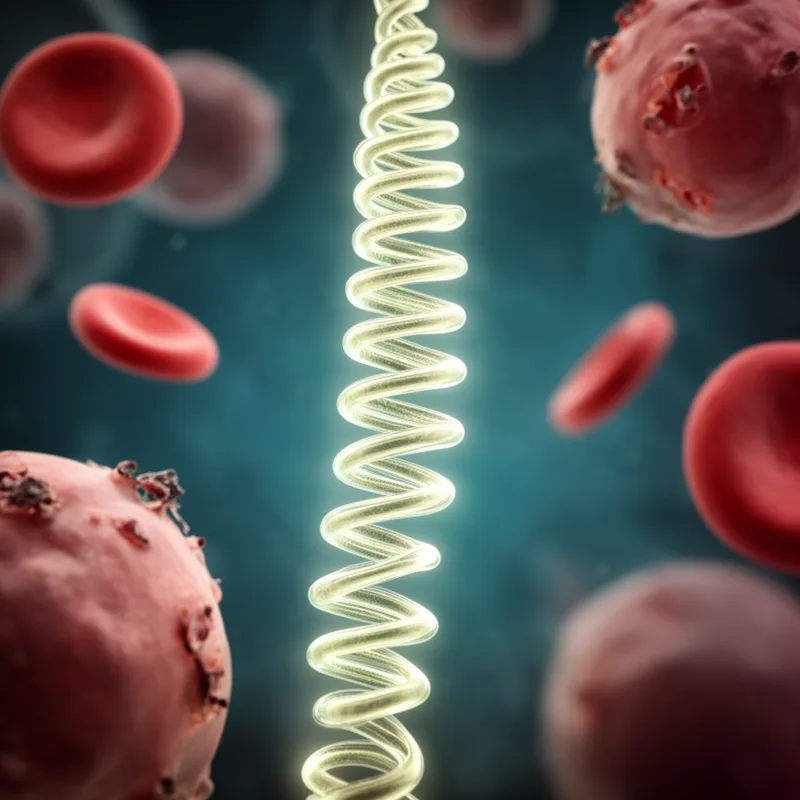
spirochete
 2
9.9

- noun
- /ˈspaɪrəˌkiːt/
- Specialized
- Under a microscope, the spirochete appears as a thin, spiraling bacterium.
- spirochete Borrelia hermsii
- spirochete isolated
Examples
-
A peripheral smear was prepared, which showed thrombocytopenia and multiple extracellular spirochetes.
Academic text (2015) -
Although no spirochetes were isolated or identified, the ecologic and geographic setting suggests that the patient was infected with B. hermsii.
Academic text (2015) -
The spirochetes are structurally the most complex of bacteria.
Academic text (2014) -
None of the animals exhibited microscopically detectable spirochetes in their blood when captured.
Academic text (2015) -
SIMC routinely tests its patients for Lyme and associated diseases, and well over 70% show the spirochete bacteria present.
Blog text (3) -
A coded diagnostic specimen of the patient's whole blood was sent to the RML for identification of the spirochetes.
Academic text (2015) -
Leptospirosis is caused by spiral-shaped bacteria called spirochetes (spy-row-keets).
Academic text (2000) -
From the blood of these experimentally exposed mice, we isolated spirochetes that originated from 4 (2 nymphs, 2 males) of the 9 ticks.
Academic text (2015) -
Field studies in other locations found additional serologic evidence and an infected tick that demonstrated a wider distribution of spirochetes circulating among the small mammal populations.
Academic text (2015) -
Supporting the above summary is that the three treponemal organisms (all spirochetes) most widely reported cannot be differentiated under a microscope (Crosby, 2003, p. 129).
Academic text (2014)
Synonyms
A small bacterium that has a spiral shape like a corkscrew
Compounds
- Specialized

 1
6.8
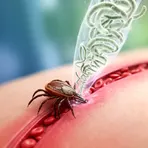
A germ that causes Lyme disease and spreads through tick bites
Surface Forms
Morphology
spirochete = spiro + chete
The term is formed from specialized Greek combining forms that are not productive standalone English words, so an average B1 learner cannot reliably infer the meaning from the parts.
Etymology
Spirochete breaks into parts: spiro meaning 'coil' and chete meaning 'hair'. So a spirochete is like a tiny 'coiled hair' bacterium that moves like a 'corkscrew', which explains its spiral shape and motion.