
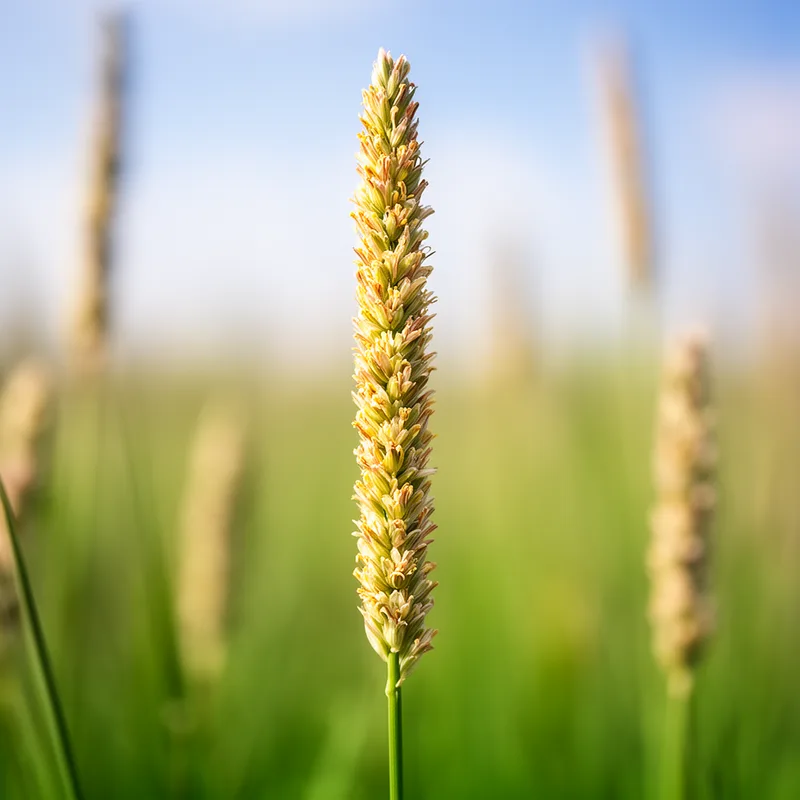
spicate
- adjective
- /ˈspaɪkeɪt/
- Specialized
- Many grasses have a spicate inflorescence, where the flowers are arranged along a central axis.
Examples
-
The plant's spicate flowers form a long, narrow cluster at the top of the stem.
-
The botanist noted the spicate arrangement of seeds on the specimen.
-
The spicate flowers are beautiful.
-
Many plants have spicate inflorescences.
-
Many grasses have a spicate inflorescence, where the flowers are arranged along a central axis.
-
The plant's spicate flowers form a long, narrow cluster at the top of the stem.
-
The botanist noted the spicate arrangement of seeds on the specimen.
Synonyms
Long, thin and pointed like a sharp stick
Surface Forms
Morphology
spicate = spike (semi-transparent) = spic + ate
The adjective is formed with the suffix '-ate' meaning 'having or resembling a spike'; although the meaning aligns with English 'spike', the form comes via a learned/Latin combining form ('spic-'), so learners may not immediately map it to 'spike'.
Etymology
Spicate comes from the Latin root spica, which means 'ear' as in an ear of grain or simply 'spike'. Think of the head of wheat or a long spike with small flowers along a central stem, so a spicate plant has its flowers or seeds arranged like that.

