

sphincter muscle


 1
4.2
1
4.2
- noun
- /ˈsfɪŋktər ˈmʌsəl/
- Specialized
- The rectum is surrounded by a tight sphincter muscle intended to keep feces in your body or expel it when having a bowel movement.
- anal sphincter muscle
- bladder and the sphincter muscle
- relaxes the sphincter muscle
Examples
-
Nothing like a little 30-knot crosswind to exercise the old sphincter muscle.
-
In some patients, rehabilitation may recover the ability to swallow and to use the sphincter muscles responsible for bathroom activities.
Blog text (1) -
Will you please release your sphincter muscle?
-
You can relax your royal sphincter muscle, your highness.
-
The sphincter muscle, like all our muscles, grows weak with age.
Fiction book (1992) -
Are you tightening your anal sphincter muscle right now?
-
She woke up when my dad's sphincter muscles and bladder let go.
Fiction book (1990) -
The sphincter muscle relaxes to allow food to pass into the stomach.
-
Strengthening the sphincter muscles can help prevent urinary incontinence.
-
After surgery, the doctor explained how the sphincter muscle controls the opening of the bladder.
Synonyms
 17
7.5
17
7.5
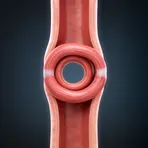
A ring of muscle that closes an opening in the body
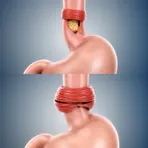
A ring of muscle that closes or controls an opening in the body
Surface Forms
Morphology
The compound is fully compositional: 'sphincter' already denotes a muscle that regulates the closure of an opening and 'muscle' specifies the tissue type, so the meaning is directly derivable from the parts. This is a technical but transparent anatomical label (similar constructions exist in many languages), so a learner who knows both constituents would understand it.
Etymology
Sphincter muscle comes from an old Greek word meaning 'to squeeze' and gives a clear picture: a tight ring of muscle that closes an opening by squeezing it. That's why the term means the ring-shaped muscle that closes or controls body openings.