
special pleading
- noun
- /ˈspɛʃəl ˈplidɪŋ/
- Jargon
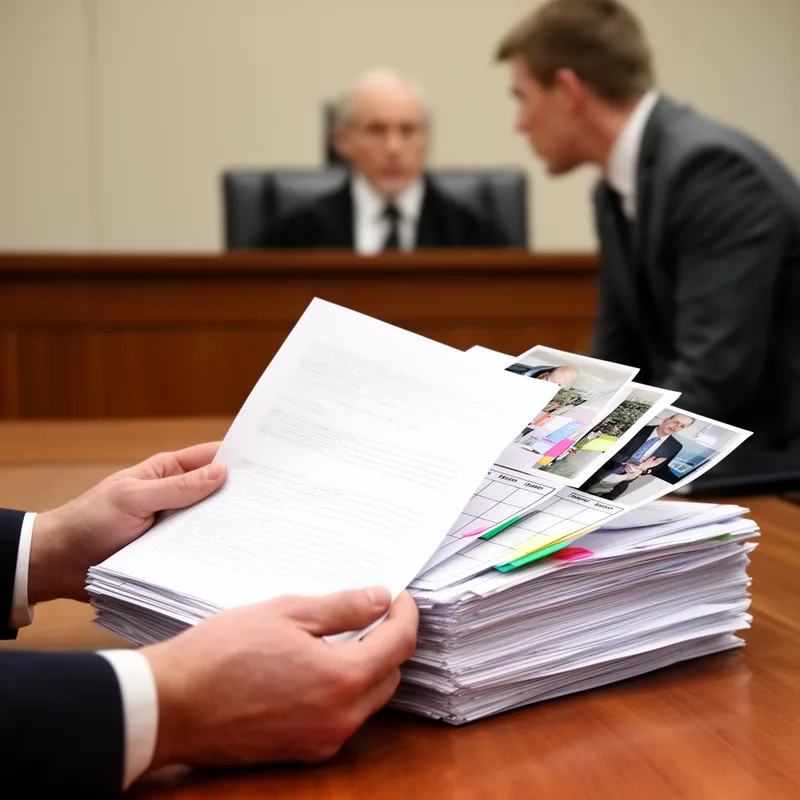
- The court distinguished between a general denial and a special pleading that introduced new evidence.
Examples
-
The defense attorney submitted a special pleading in response to the plaintiff’s accusation.
-
His use of special pleading attempted to circumvent the main point of the lawsuit.
-
A special pleading was filed yesterday.
-
Don't use special pleading in your argument!
-
In her response, the lawyer resorted to special pleading by presenting new facts that contradicted the accusations.
-
The judge noted that the defendant's special pleading did not directly deny the claims but instead introduced unrelated information.
-
To strengthen his case, the attorney filed a special pleading outlining fresh evidence that challenged the original allegations.
Synonyms

A defendant's statement giving new facts to defeat the plaintiff's claim
Surface Forms
Morphology
The parts 'special' (particular/unusual) and 'pleading' (an argument or plea) give a learner some clue that this refers to a particular kind of argument or request. However, the precise rhetorical meaning — making an unjustified exception or ignoring contrary evidence (a fallacy) — is a technical, non-obvious extension and is unlikely to be fully predictable to a B1 learner, so the expression is only partly transparent.
Etymology
Special pleading comes from law. Lawyers filed a 'special' pleading — a written paper that added extra facts to avoid the main accusation instead of simply denying it, so in law it means a pleading that introduces new facts.

