
spatialism


 1
9.9
- noun
- /ˈspeɪʃəlˌɪzəm/
- Specialized
- Her latest installation demonstrates clear influences from the principles of spatialism.
Examples
-
The concept of spatialism revolutionized modern art.
-
The museum's exhibit explores how spatialism challenged traditional ideas of painting and sculpture.
-
Fontana is regarded as the founder of spatialism in the post-war European art scene.
-
Many artists embraced spatialism in their work during the 1950s.
-
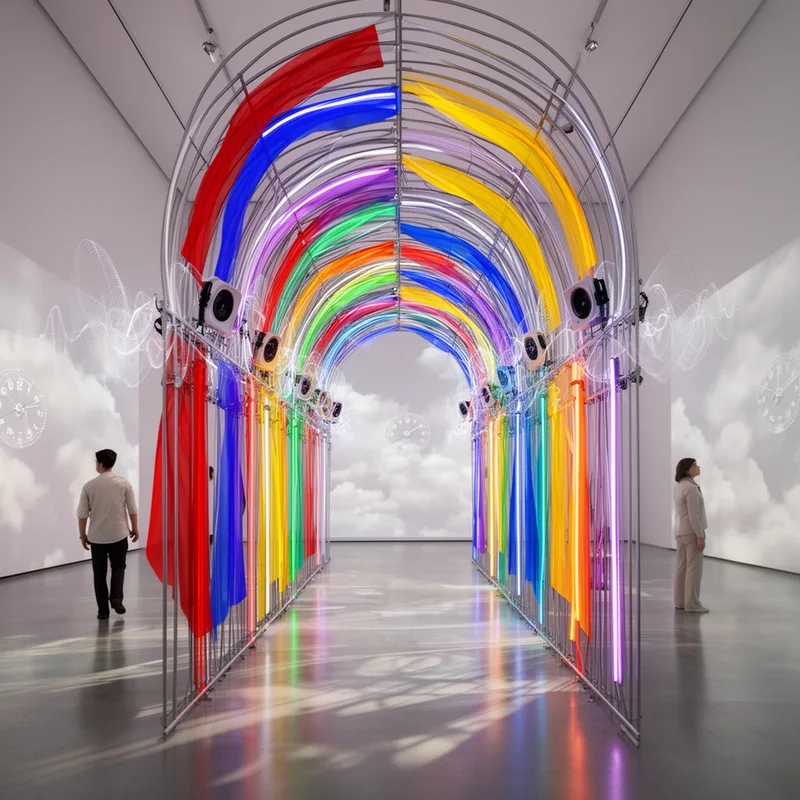
The exhibition features works that demonstrate the principles of spatialism, combining color and movement in innovative ways.
-
Many artists in the spatialism movement focus on how light interacts with different materials.
-
Lucio Fontana's contributions to spatialism changed the way we perceive three-dimensional art.
Surface Forms
Morphology
Etymology
Spatialism comes from spatial, meaning 'relating to space', plus the ending -ism, meaning 'a belief or movement'. So, spatialism is an art movement that makes 'space' part of the artwork, which is why artists like Lucio Fontana used colour, sound, movement and time in their works.