
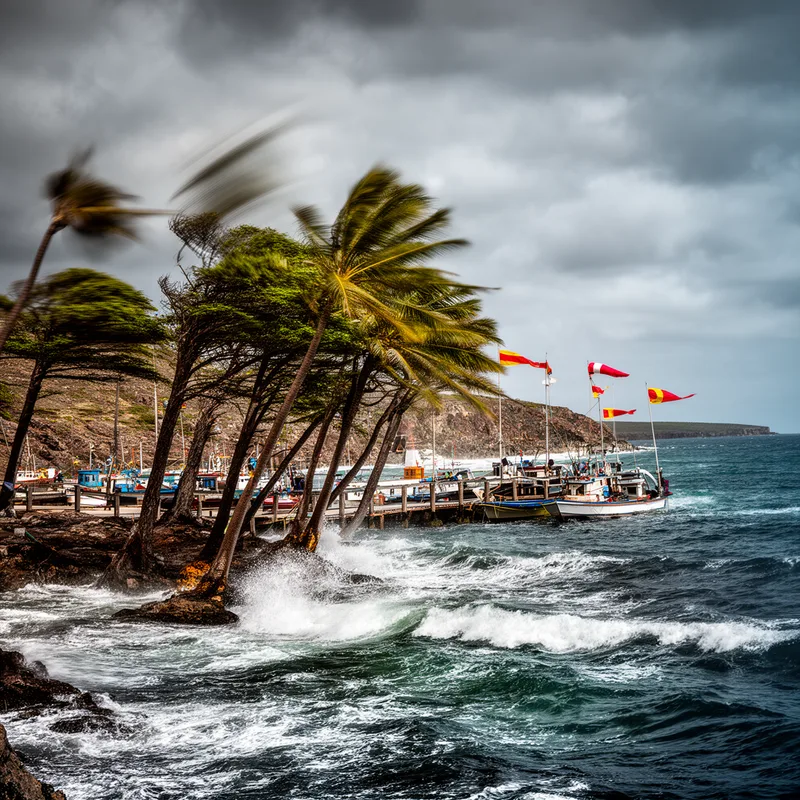
southeaster
- noun
- /ˈsaʊθˌiːstər/
- For example, the passage of a southeaster followed by strong northwesterly wind in January 1878 generated large waves that kept ships from unloading at Anaheim Landing for twelve days.
Examples
-
Increased meridional circulation, also associated with some intense storms, may have been responsible for the southeasters, because that circulation was characteristic of the Little Ice Age climate elsewhere.
Academic text (1994) -
They were known as southeasters and were accompanied by heavy precipitation, large waves, coastal erosion, and strong littoral transport to the north.
Academic text (1994) -
After twelve hours of wind from the southeast, waves that were short and very high developed at the beginning of a southeaster.
Academic text (1994) -
The southeasters declined in intensity and frequency as the century progressed and the Little Ice Age ended.
Academic text (1994) -
The southeasters affected coastal geomorphology.
Academic text (1994) -
Known as southeasters, those storms caused erosion and strong littoral transport to the north.
Academic text (1994) -
Historical sources indicate that the coast of Southern California was subject to disruptive storms known as southeasters during much of the nineteenth century.
Academic text (1994) -
The disappearance of the southeasters near the end of the nineteenth century occurred at the close of the climatic interval known as the Little Ice Age.
Academic text (1994) -
The first shipwreck in the bay was the brig Danube, which a southeaster drove ashore in December 1828 (Guinn 1900).
Academic text (1994) -
The powerful southeaster intensified overnight, pushing waves to the shore and causing coastal flooding.
Synonyms

A strong wind blowing from the southeast
Surface Forms
Morphology
Etymology
The word southeaster is made from south + east with the ending -er, where -er means 'something from'. It literally says 'from the southeast', so a southeaster is a wind that blows from that direction.

