
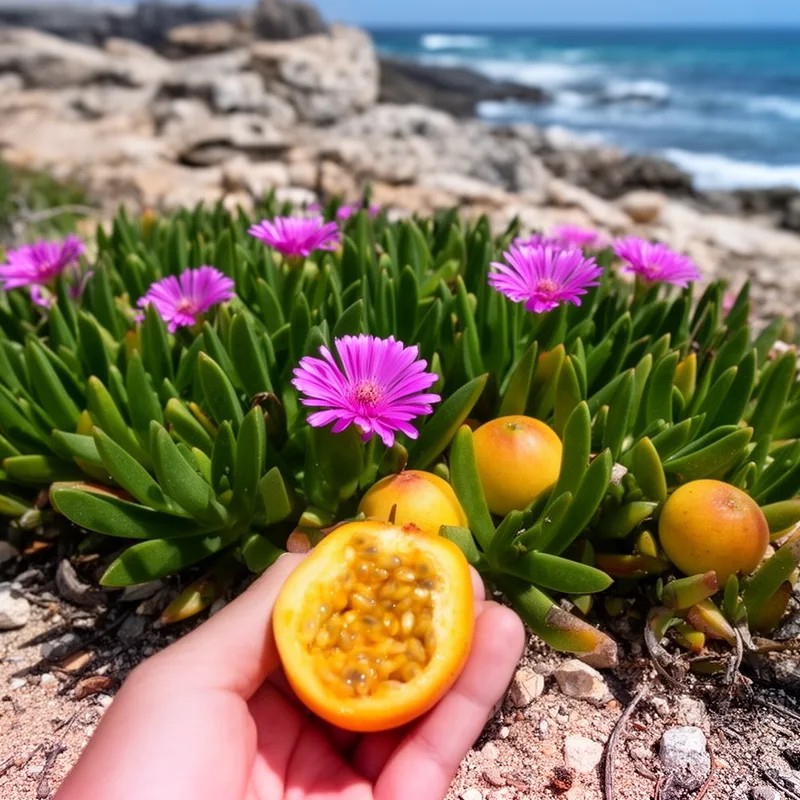
sour fig
- noun
- South African
- We tasted the tangy fruit of the sour fig while hiking along the coast.
Examples
-
The sour fig is often used to make jams in South Africa.
-
The sour fig is native to South Africa.
-
A patch of sour fig covered the rocky ground, its pink flowers in bloom.
-
Many people enjoy the taste of sour figs.
-
We tasted the tangy fruit of the sour fig while hiking along the coast.
-
A patch of sour fig covered the rocky ground, its pink flowers in bloom.
-
The sour fig is often used to make jams in South Africa.
Synonyms
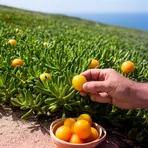
A low plant with thick leaves used as ground cover that has edible fruit

A low spreading South African plant with thick leaves and sour, edible fruit

A low plant with thick, fleshy leaves and sweet edible fruit from South Africa

A low plant with thick leaves that grows on coastal sand and has edible fruit
Surface Forms
Morphology
The phrase 'sour fig' is a straightforward noun compound describing a fig-like plant or fruit with a tart taste, so its meaning is directly derivable from 'sour' (tart) + 'fig' (the fruit). Even if learners don't know the specific species, a B1 learner who knows both words can infer it refers to a plant/fruit with a sour flavor, so the expression is compositionally transparent.
Etymology
Sour fig comes from the plant's sour, fig-like fruit. People made jam from its soft pulp, so the words sour and fig describe the taste and look of the fruit and explain the name.

